
Insights about the political situation in Syria
By Dr. Anas Al Raheb
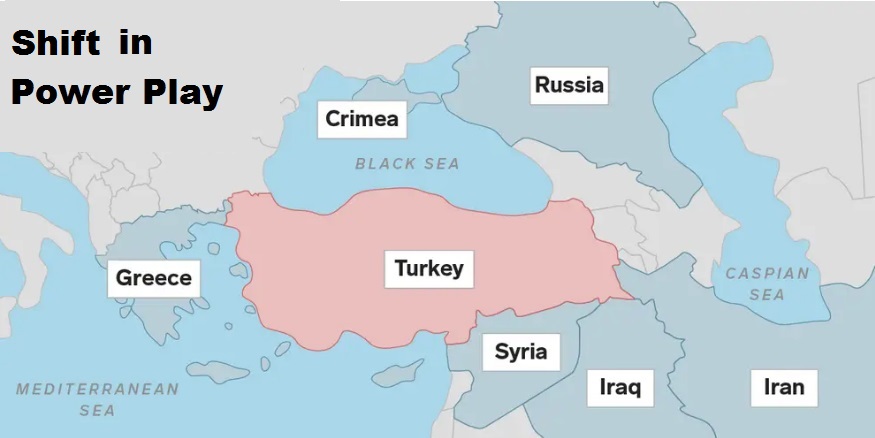
Political, geopolitical, economic, security and military changes are now forming a new concept .Their effects, and changes in the global political scene have been campaigned for by Moscow, Beijing, Riyadh, Abu Dhabi, Tehran and Ankara, and have become new hubs in international politics, in contrast to the decline in the role of London, Paris and Washington.
After the end of World War II, and until the present decade, the world witnessed two changes in international politics. The first was with the dissolution of the Soviet Union and the collapse of the Eastern Bloc, which led to the transfer of world leadership to the United States. The second was based on three successive factors:
The first was President Putin taking over power in Russia. The second was the crisis that afflicted the Arab countries, under the name “Arab Spring Revolutions”. The third relates to Washington’s withdrawal from the Middle East, its withdrawal from Afghanistan, and its focus on confronting China and Russia.
Political, geopolitical, economic, security and military changes are now forming a new concept with their effects. In general, the changes in the global political scene that were campaigned for by a few capitals (Moscow – Beijing – Riyadh – Abu Dhabi – Tehran – Ankara) have become new hubs in the new international politics, in return for a decline in the power effects of London, Paris and Washington in the region
These capitals were able to overcome many barriers and establish and consolidate their presence. The Russian-Ukrainian war had a major turning point in these variables, which greatly affected the world, especially the European Union.
After the United States embroiled both Ukraine and the European Union in this war , it went further and centered on China – Taiwan.With its usual arrogance it created havoc with effects that may extend to the entire world.
These changes led to the emergence of international powers, such as Russia and China, and regional powers, such as Turkey and Iran, to become influential and players in the Middle East, in addition to the emergence of new strategic shifts in the policy of some Arab Gulf states, especially Saudi Arabia and the United Arab Emirates, which were confirmed by the Jeddah Summit.
To be continued…
Editor In Chief
Reem Haddad