
Industry in Syria’s Aleppo four years after liberation from terrorism
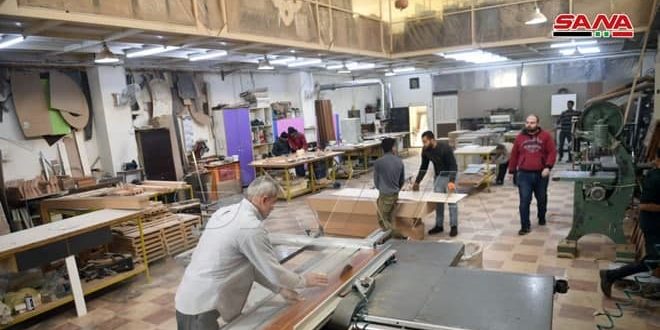
The Industrial City in Sheikh Najjar in Aleppo has for a long time been a major contributor to the development of the Syrian industrial and economic sectors through its various products. More than 675 industrial facilities have returned to work and started production in this city, proving that the Syrians’ determination to confront terrorism and its supporters as well as sanctions has grown stronger.
Four years after liberating Aleppo from terrorism by the Syrian Arab Army, the number of industrial facilities working in Sheikh Najjar industrial city has reached 675 with new facilities continuously joining production in this city to elevate the industrial sector and help it restore its glory as the biggest contributor to Syria’s economy.
According to Eng. Hazem Ajjan, Director of the Industrial City in Sheikh Najjar, the city was built on an area of 4412 hectares containing 6000 industrial sections. He said that nowadays, there is a great demand for investment in this economic edifice due to the improvement of the investment situation there and the facilitations provided by the government to investors. He pointed out that 467 new sections have been given to industrialists to start work during this year and that 200 new building licenses were granted to activate the construction sector, thus leading to the entry of 100 new facilities to the city in recent months.
 Ajjan made it clear that the infrastructure as well as the factories in the industrial city in Sheikh Najjar were exposed to massive destruction because of terrorism. However, after the process of rehabilitation and rebuilding started in this industrial city, all the necessary service projects were accomplished and investors returned to rebuild their facilities.
He pointed out that focus is currently being put on marketing the products through establishing a fairgrounds in the city on an area of 20 hectares.
Moreover, Ajjan said, the industrial city reached an agreement with the General Establishment of Housing in order to dedicate a 258-hectar area to build a worker housing complex to secure houses for workers in this city, pointing out that this housing area is expected to be accomplished next year.
Many facilities working in the textile, engineering and food industries have resumed production in the city after they were rehabilitated and supplied with new production lines and machinery.
 Industrialist Mohannad Qazmouz, who owns a facility for making furniture, and who was among the first returnees to the industrial city in Sheikh Najjar after Aleppo’s liberation, said that he rehabilitated his factory, which was burned to the ground by terrorists, benefitting from the basic elements provided by the industrial city. He stressed that he managed, with simple capabilities, to launch production again and gradually produce quality furniture items that meet the local market’s needs.
He called on concerned government parties to provide assistance in ensuring the raw materials necessary for industry in order to achieve competitiveness of production. He also urged all the Syrian investors abroad to return to their factories and re-operate them.
 Ahmad Mahrouseh, owner of a facility for food industries in Al-Mansoura town, to the west of Aleppo, said that his factory was destroyed by terrorists so he went to the industrial city in Sheikh Najjar to benefit from the advantages provided to investors and start work again. He pointed out that ensuring the fuel and raw materials necessary for production under the current blockade imposed in Syria, is among the major difficulties that impede the production process.
Abdul Hafeez Al-Subat, Director of a carpet factory that was destroyed by terrorists, said that the factory was rehabilitated and equipped with new production lines to start producing different kinds of carpets in order to meet the need of the local market and support the national economy.
On his part, Nour Milhem, who owns a facility for grain grinding, said that he benefitted from the advantages provided to industrialists in order to rehabilitate their facilities in this industrial city. He added that he fixed the damaged machinery, rebuilt what has been destroyed and started producing flour in cooperation with concerned government parties.
Hamda Mustafa