
Human ‘super predator’ more terrifying than bears, wolves and dogs
Bears, wolves and other large carnivores are frightening beasts but the fear they inspire in their prey pales in comparison to that caused by the human ‘super predator.’
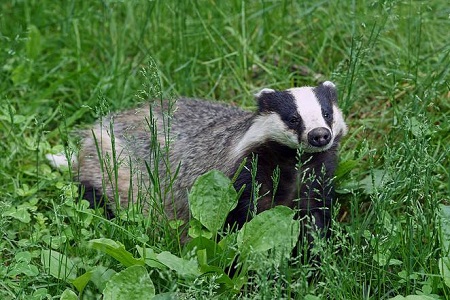
A new study demonstrates that smaller carnivores, like European badgers, that may be prey to large carnivores, actually perceive humans as far more frightening. Globally, humans now kill smaller carnivores at much higher rates than large carnivores do, and these results indicate that smaller carnivores have learned to fear the human ‘super predator’ far more than they fear their traditional enemies according to Science daily.
Zanette, a professor, and her colleagues experimentally demonstrated that smaller carnivores, like badgers, foxes and raccoons, that may appear to be habituated to humans because they live among us, are actually experiencing elevated levels of fear — living in fear of the human ‘super predator’ in human-dominated landscapes.
“Our previous research has shown that the fear large carnivores inspire can itself shape ecosystems. These new results indicate that the fear of humans, being greater, likely has even greater impacts on the environment, meaning humans may be distorting ecosystem processes even more than previously imagined,” explains Zanette, a wildlife ecologist. “These results have important implications for conservation, wildlife management.”
By frightening their prey, large carnivores help maintain healthy ecosystems by preventing smaller carnivores from eating everything in sight, and the loss of this ‘landscape of fear’ adds to conservation concerns regarding the worldwide loss of large carnivores. Fear of humans has been proposed to act as a substitute, but these new results demonstrate that the fear of humans is qualitatively different and cannot be expected to fulfill the same ecosystem function.
The team conducted the study on Europeans badgers .To experimentally compare their relative fearfulness, the team played badgers the sounds of bears, wolves, dogs and humans in their natural habitat and filmed their responses, using hidden automated speakers and cameras. Whereas hearing bears and dogs had some effect, simply hearing the sound of people speaking, in conversation, or reading passages from books, prevented most badgers from feeding entirely, and dramatically reduced the time spent feeding by those few badgers that were brave enough to venture forth — while hearing the sound of the human ‘super predator.’
N.H.Kh