
How climate change could kill off reptiles
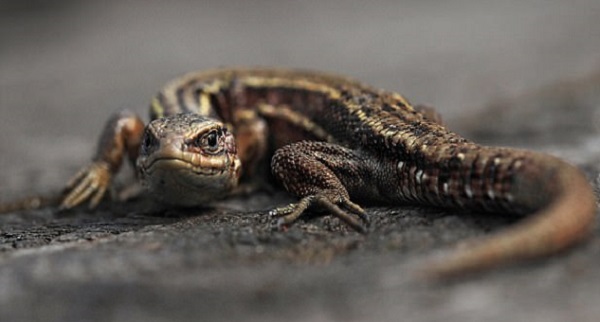
Global warming could threaten the survival of reptiles by reducing the number of bacteria living in their guts, researchers have found. According to Daily mail
They found that warming of 2-3°C (35-37°F) caused a 34 per cent loss of microorganism diversity in the guts of common lizards.
The researchers said that similar effect could be seen in other cold-blooded animals too, which depend on external sources of body heat.
By raising temperatures by 2-3°C in the experiment, the researchers, recreated warming predicted by current climate change models.
In the experiments, viviparous lizards were put in temperature-controlled enclosures and samples of their gut bacteria were tested to identify what types of bacteria were present.
They found that the diversity of bacteria was lower for lizards in warm conditions, and this had an impact on their survival chances.
‘Our research shows that a relatively small rise in temperature can have a major impact on the gut bacteria in common,’ said Dr Elvire Bestion, who led the study.
‘More testing is now needed, and it is highly possible that we will see similar effects in other ectotherms (cold-blooded animals such as reptiles and amphibians which depend on external sources of body heat).
‘Given the importance of bacteria to digestion, it is crucial that more research is now carried out to investigate this overlooked effect of climate change.’
Although climate change is considered the greatest threat to biodiversity ecological networks, Dr Bestion says that its impacts on bacteria in plants and animals are not well studied.
She said that we are only now starting to understand the importance of gut bacteria in all species, including humans.
‘These bacteria are linked to everything from digestion to immunity and obesity,’ said Dr Bestion.
‘The gut is the latest health craze in humans – with everything from probiotic yoghurts to faecal transplants being marketed – but almost no studies have been done on how the changing climate will affect these microbes.’
Other studies looking into the effects of climate change on animals have also been conducted.
N.H.Kh