
Hand-craved wooden Maamoul molds, traditional craft in Damascus
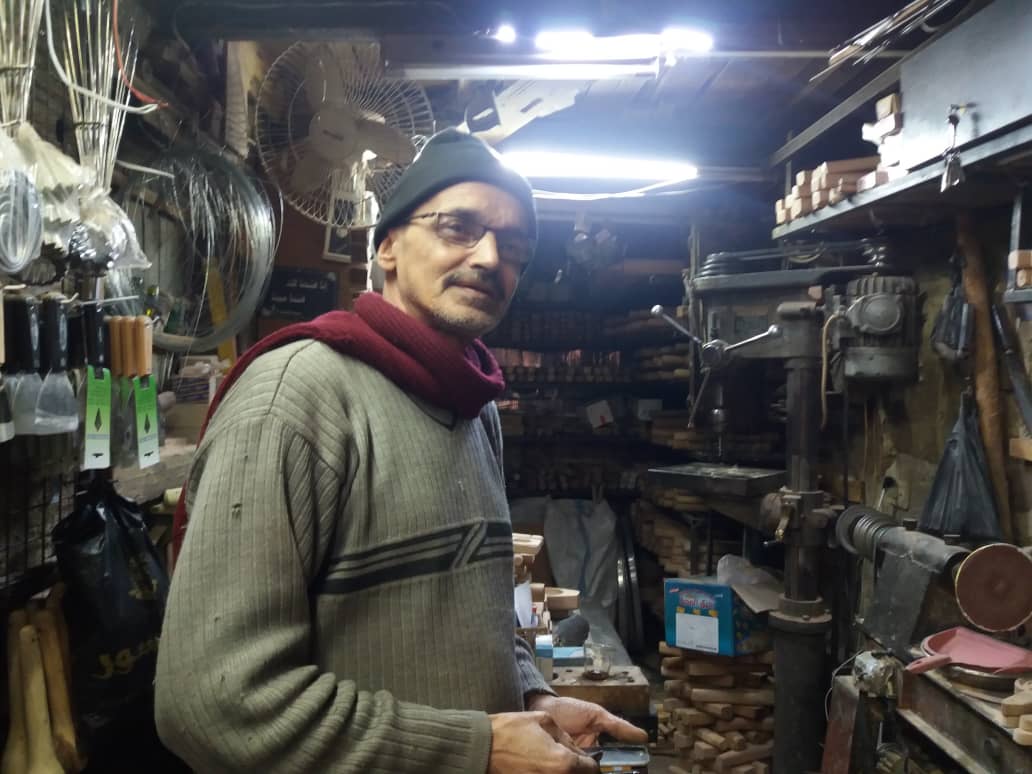
In the road that links Bab Sharqi and Al-Bazuriyeh market in Damascus, the 4 oldest workshops that produce hand-craved wooden Maamoul molds are located.
Mr. Abo Hossien, who has 22 years experience in producing carved maamoul molds, told Syria Times that he enjoys listening to the sound of knocking the molds.
The craft of making wooden Maamoul molds dates back to 150 years ago, and its main material is apricot wood or beech.
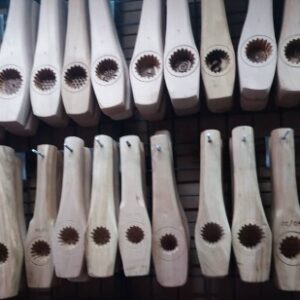 “The production of Maamoul molds depends on ensuring the raw material, which is strong wood that is suitable for this industry, and the skill of the workers is to produce the required shape in a distinctive way,” Mr. Abo Hossien said.
He went o to say: “At the beginning, we make the required shape from wood, and then we treat it so that it does not crack. After that we cut it by special machine or manually to determine the final out shape of the mold, and then we crave it manually or automatically . The production of one mold takes 15-60 minutes according to the drawing to be craved.”
Abo Hossien made it clear that beech is imported, while apricot wood exists in the country. “The price of one ton of apricot wood is 6 million Syrian pounds and we could produce 125 molds.”
He indicated that the production reduced 70% since Ramadan month.
Most of Syrian families are used to making Maamoul stuffed with dates, or walnut or pistachios at their houses for Eid Al-Fitr and Eid Al-Adha.
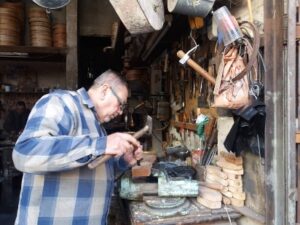 Mr. Marzouq Nwilat, another craftsman, told us that the secret of the craft is related to the technique of lines that the craftsman craves so as to prevent the sticking of the Maamoul dough inside the mold. He uses tools that he made himself and keeps them in the drawers of his antique table to carve the wood and carve the details professionally.
The 70-year-old craftsman pointed out that some factories and shops that specialize in making the famous Syrian sweets require carving the name of the factory inside the mold to become their own trademark.
Despite industrial progress and the availability of modern alternatives, this industry has maintained its existence for the simple reason that its customers still want to own them.
Reported by: Basma Qaddour