
Exploring the evolution of spider venom to improve human health
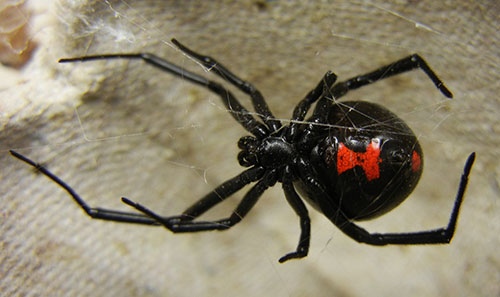
More than 46,000 species of spiders creepy crawl across the globe, on every continent except Antarctica. Each species produces a venom composed of an average of 500 distinct toxins, putting the conservative estimate of unique venom compounds at more than 22 million. This staggering diversity of venoms, collectively referred to as the venome, has only begun to be explored.
Among the handful of brave scientists studying spider venom are Greta Binford,Oregon and Jessica Garb. Both of these researchers analyze the protein structures of various venom chemicals in search of clues that can explain why some are lethal, while the vast majority are thought to be relatively harmless.
The scientists also use molecular biology tools to compare the genomes of spiders that have extremely noxious venoms, including the black widow and the brown recluse, to those of spiders with non-poisonous venoms, such as the house spider. “For some reason I tend to gravitate to these really dangerous spiders like the black widow,” says Garb. “But they’re amazing. With their shiny black body adorned with the red hourglass, they’re actually quite elegant.”
Binford is similarly drawn to deadly spiders, despite the inherent danger. “I grew up on a farm and had the luxury of exploring and turning over rocks and being curious,” says Binford. “Any feelings of being scared or grossed out by spiders were rapidly replaced by my feelings of awe for how amazing and diverse these creatures are.”
The data being collected by Garb and Binford and their colleagues have the potential to increase our understanding of the evolution of spider venom and contribute to the discovery of new medicines, anti-venoms and insecticides. In addition, because many of the deadlier spider venoms produce their toxic effects by overstimulating the production of brain signaling molecules, this research may uncover novel tools for neuroscience research.
Source: Science daily
N.H.Kh