
Exhibition “Detained and Missing” at the National Museum Documents Syrian Pain from the First Arrest to the Fall of the Dictator
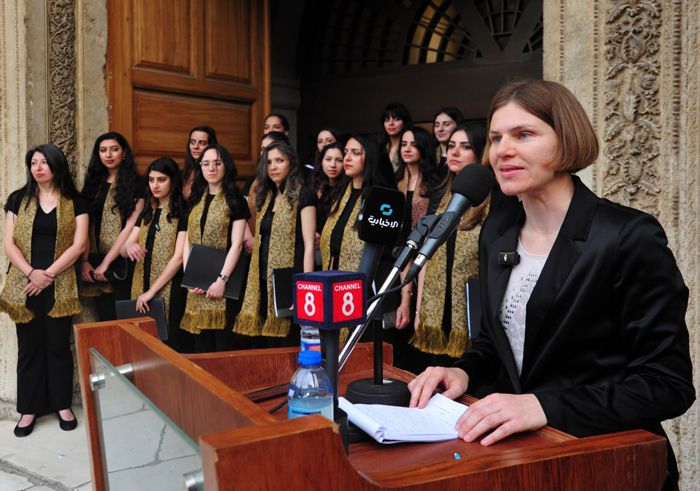
At the National Museum in Damascus, where history mingles with the silence of stones, the exhibition “Detained and Missing” was inaugurated, organized by the platform “Creative Memory for the Syrian Revolution,” under the auspices of the Ministry of Culture and the General Directorate of Antiquities and Museums.
The exhibition, which runs until June 6, reopens the most painful chapters of Syrian memory, as the director of the “Creative Memory for the Syrian Revolution” platform, artist Sana Al-Yazji, has gathered 14 years of continuous work, dedicating her efforts to documenting the tragedy of Syrians through art, making documentation a form of striving for justice.
Following the opening of the exhibition, the “Gardenia” choir performed songs from classic pieces etched in memory.
Minister of Culture Muhammad Yassin Saleh, who attended the event, stated in his speech: “We inaugurate this exhibition simultaneously with the issuance of the presidential decree to form the National Commission for Missing Persons, believing that culture can only be built on foundations of truth. No dignity can be preserved if we do not grant the missing their right to knowledge and recognition because truth should not be obscured as its owners were – our responsibility today is to do everything in our power to reveal it.”
Minister Saleh announced that the ministry would present an award to individuals who played a role in saving the National Museum of Damascus, in recognition of their contributions.
Reema Khawam, Secretary-General of the National Museum of Damascus, spoke about the symbolism of hosting this event in a place that chronicles human history, providing space for contemporary Syrian memory about pain, patience, loss, and hope.
Regarding the hope offered by the exhibition about detainees at the heart of the National Museum, Ms. Anne Sophie, Chargé d’Affaires at the German Embassy in Syria, stated: “Just being here and holding the exhibition in this place and speaking freely together about the past, present, and future is an extremely important moment and an indication that the space for shared thinking is beginning to expand and that memory is starting to be reclaimed.”
For his part, Hussam Baraki, representative of the Friedrich Ebert Foundation (FES) for social democracy supporting the Creative Memory for the Syrian Revolution platform, considered the exhibition a political act and a call for dignity and justice—not through wishful thinking but through action, narration, and confrontation—to stand against forgetfulness and impose presence over absence as a step toward truth and a more just and humane Syria.
Regarding the motivation for documentary work since the early days of the revolution, Al-Yazji explained that the deeper drive is to preserve these works because the fallen regime was killing everything, even expression.
Al-Yazji pointed to the symbolism of the graffiti artist who wrote the first slogans of freedom on walls, considering him a manifestation of that moment when art played a fundamental role in shaping consciousness and exposing violence, establishing a new awareness that mobilizes society.
In conclusion, art remains capable of expressing and documenting by transforming pain into creative action. The exhibited paintings provide victims not just symbolic presence but contribute to building a collective memory that embodies violations, conveys testimonies, and restores victims’ status in public consciousness.
Souha Suleiman