
“Enzo” Eagle statue … A 4,500-year-old artifact depicting cultural exchange between Mesopotamia and Syria
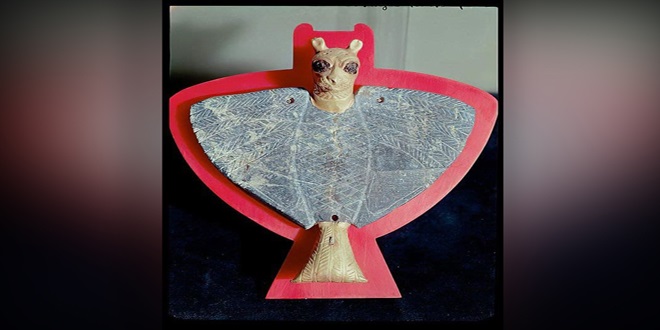
The statue of the god Enzo, which is found at the National Museum of Damascus and dates back to 2500 BC, embodies the cultural exchange between Mesopotamia and Syria since ancient times.
The statue, which was discovered in the foundations of Mari Palace in 1965 in a pottery jar , was originally sent as a gift from the King of Ur in southern Iraq to the King of Mari.
It represents one of the masterpieces of art during the early Mesopotamian dynasties period known as the Early Bronze Age.
According to the index prepared by the General Directorate of Antiquities and Museums on the collectibles of National Museum of Damascus , the statue is an eagle with a lion’s head made of precious stones such as lapis lazuli , gold, copper and bitumen. Its height reaches 12.8 cm with a width of 11.8 cm.
It is noteworthy that the statue’s name “Enzo” is derived from the Sumerian language and is considered a symbol of the Mesopotamian god of war Ningirsu . It is believed to have been used as a necklace by noting holes drilled in the wings of the statue.
Rawaa Ghanam