
Digital exhibition on Syrian mosaics at Damascus National Museum highlights Syria’s rich cultural heritage
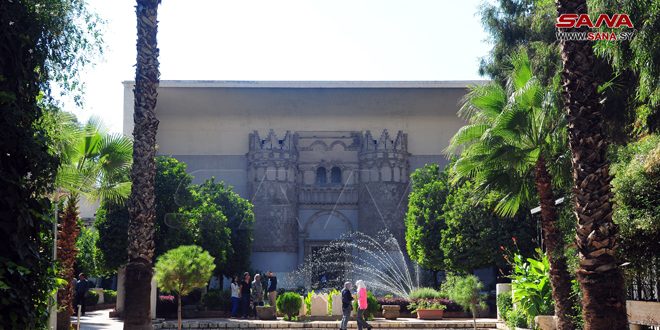
The General Directorate of Antiquities and Museums (GDAM) in cooperation with the European Center for Byzantine and Post-Byzantine Monuments and the Department of Antiquities at Damascus University on Tuesday opened a digital exhibition on Syria’s historical mosaics under the slogan “Syria is still the source of arts”.
This cultural event, hosted by the National Museum of Damascus, aims at shedding light on the Syrian cultural heritage and its valuable elements and at protecting this heritage from dangers.
The 7-day digital exhibition displays Syrian mosaics in an interactive and distinguished style through presenting a map that shows many sites, pictures and information about mosaic panels that date back to the late antiquity and the early Byzantine era. The event will also present short films about the restoration and documentation works carried out during the years of terrorist war on Syria to preserve the Syrian heritage.
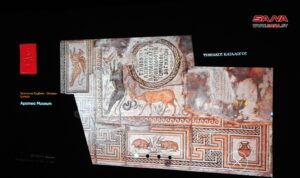 Minister of Culture Lubana Mushaweh talked about the great efforts that were exerted between 2004 and 2010 by the GDAM and the European Center for Byzantine and Post-Byzantine Monuments and Damascus University to document images of 365 mosaic pieces from the world human heritage and then convert them to digital. She pointed out that these pieces can be found countrywide.
She affirmed that the exhibition is important to brief the Syrians as well as other peoples of the world on the treasures of the Syrian civilization which constitute a human value for all peoples on earth, appreciating the GDAM’s pioneering work in protecting and preserving the Syrian tangible heritage.
On her part, Natalia Poulos, Director of the European Center for Byzantine and Post-Byzantine Monuments, said that the exhibition comes within the framework of cooperation with the Syrian side to restore, protect and introduce Byzantine and non-Byzantine monuments and to highlight their aesthetic, artistic and historical importance.
Hamda Mustafa