
Dialogue sessions within the Syrian-Russian Youth Forum continues for 3rd day
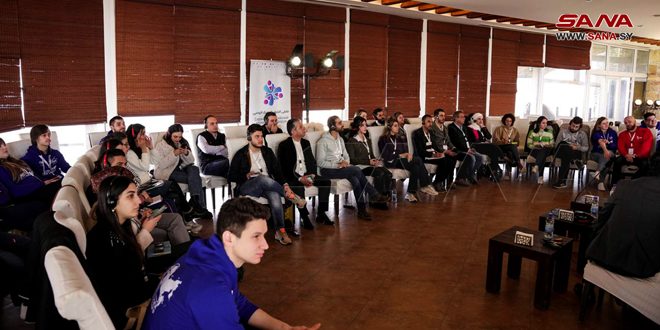
Lattakia – (ST)- The Syrian-Russian Youth Forum continued its dialogue sessions for the 3rd day under the title“Culture as Belonging and Identity”, during which Dr. Hammam Saad, Director of Excavations and Archaeological Studies at the General Directorate of Antiquities and Museums, presented a number and statistics about the damage caused to museums, heritage sites and archaeological monuments throughout the Syrian geography as a result of the terrorist war and the systematic sabotage, looting, theft and smuggling operations that they were subjected to at the hands of armed terrorist organizations.
The dialogue dealt with the procedures adopted during the terrorist war with the aim of protecting the archaeological collections in museums, which included closing the museums, emptying their galleries, keeping artifacts in safe places, building walls around large archeological artifacts that cannot be moved, fortifying interior doors and windows of museums and launching a national campaign to raise awareness about the importance of heritage.
For his part, Timur Karma, who has a PhD in history and who is currently working at the Russian Cultural Center in Damascus, talked about the need to protect cultural heritage and archeological sites. He said that the first joint Syrian-Russian project was the restoration of the archaeological spring of Afqa in Palmyra in 2021, in addition to a series of works carried out by the Russian archaeological mission in the Wadi Qandil area.
The second activity of the forum was a visit by the youth delegation to the “Syria Natural Products” factory in the village of Bakrama in the Qardaha countryside in Lattakia. The youths listened to an explanation by the staff running the factory about the various stages of production leading to the final product.
Amjad Burbhan, General Director of the factory, stressed the importance of returning to agriculture and providing job opportunities for the local population, especially the families of the martyrs and the wounded.
Berbhan added: The factory obtains farmers’ products of medicinal and aromatic herbs, wild thyme, thyme, rosemary, lemon balm, and chamomile, where they are processed, packaged to be ready for marketing.
This project is directed to support the families of the wounded and martyrs, Vice President of the National Union of Syrian Students Amer Talas said.
The “Syria Natural Products” factory is important for developing the economy, improving people’s living conditions and building a better future, Nikolai Romashenko, Vice President of the Russian Young Guard Movement, added.
Head of the branch of the Young Guard movement in the Chelyabinsk region, Maxim Goloshapov, explained the importance of establishing Small development facilities to support the local and national economy, pointing out that the products are natural and healthy.
Dean of Tishreen University, Dr. Bassam Hassan expressed his hope to increase joint cooperation between Syrian and Russian universities in the research and scientific field.
Dr. Dareen Suleiman, President of the National Union of Syrian Students, spoke about the Union’s role in promoting citizenship and participation through dialogue.
The state paid great attention to the children of the wounded and martyrs in terms of allocating academic seats, providing scholarships, financial and material and financial support to help them pursue their education and attain their academic achievment in universities, she pointed out.
Hanan Shamout