
Damascus Thanks Iran’s Efforts for Peaceful Settlement of Problems in Syria
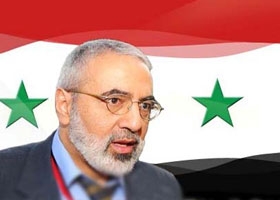
 TEHRAN (FNA)- Syrian Information Minister Omran al-Zoubi hailed Iran for its initiative to host a “National Dialogue” meeting between the Syrian government and opposition groups on Sunday, saying that Iran’s efforts to resolve problems through diplomatic means has made it an outstanding international actor with regard to Syria.
“Iran is a supporter of talks among different Syrian sides and this very approach has made it distinct from many other countries,” al-Zoubi told Iran’s Arabic-language news channel, Al-Alam, on Saturday.
“Since the start of crisis in Syria, Tehran has been struggling to gather the Syrians around the table of political negotiations,” he added.
On Tuesday, Iranian Deputy Foreign Minister for Arab and African Affairs Hossein Amir Abdollahian announced that the Syrian government and opposition parties would send “their representatives to Tehran this week to attend a National Dialogue meeting”.
“Syrian government officials as well as representatives of ethnic, political, minority, and opposition groups will attend this meeting,” Amir Abdollahian told FNA.
Also, Iranian Foreign Minister Ali Akbar Salehi had on Sunday reiterated the necessity for the peaceful settlement of the crisis in Syria, and called for more talks between the Syrian government and opposition forces.
Salehi’s remarks were made in a meeting with KRG Prime Minister Nechirvan Idris Barzani in Tehran.
On Iran’s diplomacy about Syria, Salehi said that the Islamic Republic is in favor of negotiations between the Syrian government and opposition groups to create stability in the Middle Eastern country.
Syria has been experiencing unrest since March 2011 with organized attacks by well-armed gangs against Syrian police forces and border guards being reported across the country.
Hundreds of people, including members of the security forces, have been killed, when some protest rallies turned into armed clashes.
The government blames outlaws, saboteurs, and armed terrorist groups for the deaths, stressing that the unrest is being orchestrated from abroad.
In October 2011, calm was eventually restored in the Arab state after President Assad started a reform initiative in the country, but Israel, the US and its Arab allies are seeking hard to bring the country into chaos through any possible means. Tel Aviv, Washington and some Arab capitals have been staging various plots in the hope of increasing unrests in Syria.
The US daily, Washington Post, reported in May that the Syrian ”rebels” and terrorist groups battling the President Bashar al-Assad’s government have received significantly more and better weapons in recent weeks, a crime paid for by the Persian Gulf Arab states and coordinated by the United States.
The newspaper, quoting opposition activists and US and foreign officials, reported that Obama administration officials emphasized the administration has expanded contacts with opposition military forces to provide the Persian Gulf nations with assessments of ”rebel” credibility and command-and-control infrastructure.
According to the report, material is being stockpiled in Damascus, in Idlib near the Turkish border and in Zabadani on the Lebanese border.
Opposition activists who several months ago said the” rebels” were running out of ammunition said in May that the flow of weapons – most bought on the black market in neighboring countries or from elements of the Syrian military in the past – has significantly increased after a decision by Saudi Arabia, Qatar and other Persian Gulf states to provide millions of dollars in funding each month.