
Damascene Brocade & silk industry in Syria
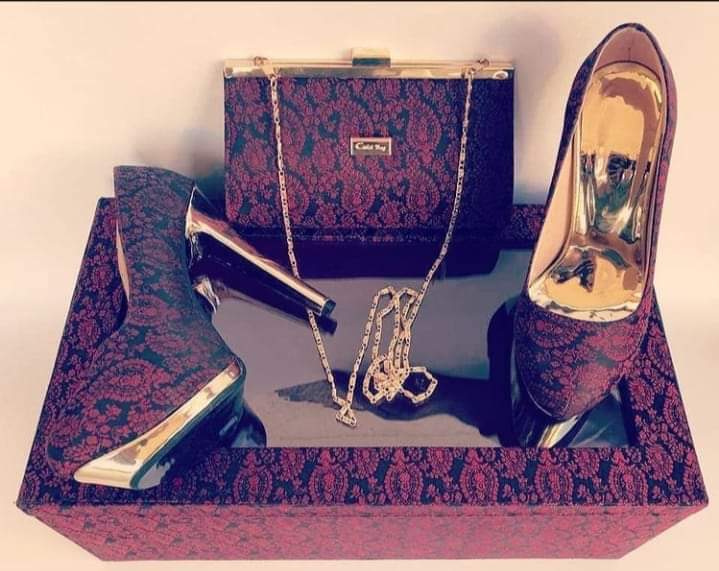
Damascus city is famous for a unique type of fabric, called brocade, which dates back thousands of years (Some reports say that it date backs to 3000 years ago, while others say 5000 years ago). It takes 12 hours to make just 3 meters of damask because of the delicate, complex patterns and attention to detail.
In 1947, the then-21-year-old princess Elizabeth II of Britain wore a wedding dress a part of which was made of Damascene Brocade. And in 1952, she wore a dress of Damascene brocade again upon her inauguration as Queen. The dress was decorated with two birds and kept in a London Museum.
Brocade means the mixture of colours and it has various patterns such as Saladin, Romeo and Juliet, Cashmere, Sinbad, Ashiq and Mashooq, according to the owner of “Al-Aseel Brokar” shop in Bab Sharqi district in Damascus, Mr. Abdul Karim Al-Aseel, who indicated that the industry of textile in Syria dates back to 10.000 years ago and it is difficult to define the exact date of the start of Brocade industry in Syria.
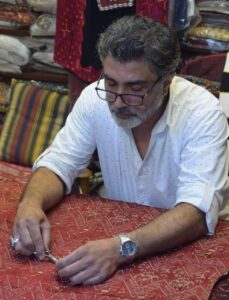
“In 1860, there were 5000 hand looms for producing brocade and the Syrians were using natural silk imported from China, but a hundred years ago, they began using silk produced in the Syrian town of Dreikish, famous for raising silkworms,” Mr. Al-Assel told Syria Times, referring to the fact that France and Britain burnt 500 hand looms in Syria in 1860 in an attempt to destroy the industry of brocade in Syria.
Today, there are just 5 hand looms in Damascus ( 2 of them are at his factory, while the other ones are at Tony M’zannar’s factory).
The model of the 2 hand looms that still exist in his factory dates back to 1910 and each one can knit 60 thread per minute, so it takes 4 hours to make one meter of brocade fabric. However, the semi-automatic looms can knit 100 thread per minute.
In 1940 his late father Deeb Al-Aseel possessed 4 hand looms in Al-Quds [Jerusalem] used for making silk shawls as there were strong ties between Damascus and Al-Quds in textile industry.
“The craftsmen of brocade in Damascus and Al-Quds were tasteful in mixing colours since Damascus is the cradle of civilizations and Al-Quds is a crossing point for pilgrimage… We have been producing cinctures made of Damask for Christian clergymen in Al-Quds… The road between Damascus and Palestine was open then” Mr. Al-Aseel added, indicating that this road has been closed due to the occupation of Palestine by the Israeli entity in 1948.
Local media reports assert that the craft of producing brocade is facing the danger of extinction due to the decline in the number of looms and the high cost of operating them as well as the lack of experience of workers in this craft and the difficulty of promoting the products.
As brocade is connected with silk, it is necessary to shed light on silk industry in Syria.
According to a report published in Arabic by the Algerian Encyclopedia of political and strategic studies in 2017, silk brought many benefits to Syria, but it also brought many misfortunes. It was a wealth that constituted a pillar of the Syrian economy from the sixth century until the middle of the nineteenth century. However, this benefit turned into misfortune since the silk industry in France in 1845 was afflicted with a great disaster because of a serious disease that decimated the silk worm in it, and the same disease also affected the silk worm in China, at a time when France was importing half of its need of Chinese silk. So the prices of silk soared during the period of crisis that extended from 1845 until 1869.

For this reason, France sought to seize the Syrian product from the cocoons at the lowest price with the aim of manufacturing silk in the West and sell it again to Syria at the most expensive price.
At that time, the industry of silk was stationed in Al-Qemareyeh neighborhood which was targeted by the events of 1860 where the West, represented by Western consuls, especially the consul of France, conspired with the Ottoman authority in order to ferment sedition among the Syrian silk manufacturers in order to displace them.
The infrastructure of the above mentioned neighborhood was completely destroyed, the silk industry’s workshops were burned down, the craftsmen were murdered and their money was stolen, and the workshops turned into small shops to sell western goods.
The main goal of the 1860 events was to target Syria which was developing at industrial field at that time.
Reported by: Basma Qaddour