
Arctic wild goose chase threatens chicks as temperatures rise
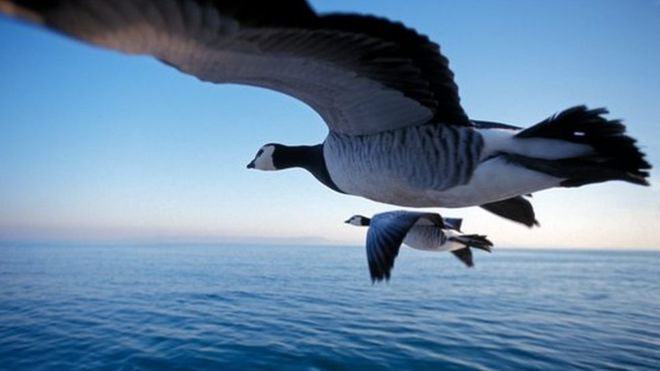
Rising temperatures in the Arctic are encouraging Barnacle geese to speed up their migration journeys north every spring, says a new study.
But their efforts to go faster are leaving them too drained to lay their eggs early when they arrive, according to BBC.
This is bad news for the species as their chicks are hatched too late to take advantage of the best food, so fewer are surviving.
The scientists involved say the birds will have to adapt and migrate earlier.
– Wanted: Inspiring name for Mars rover
– DNA shows Iceland whale was rare hybrid
– Slower ocean current to boost warming
Every spring these geese set out from their temperate wintering grounds in the North Sea, often stopping off in the Baltic to rest on their way to their breeding areas in the Russian Arctic.
However climate change is seeing spring arrive earlier in the Arctic, something the geese are blissfully unaware of, until about half way through their journeys.
“The greening of vegetation as they fly probably gives them information about the earlier spring – as they see things more green that’s a cue for them to hurry up, that’s what we think,” author Bart Nolet from the Netherlands Institute of Ecology told BBC News.
In their rush, the geese are not making their normal detour to the Baltic where they refuel. This is leaving them in a bad state when they finally arrive in Russia.
“The female sits on the eggs for three weeks almost in a row, so she really needs to arrive there with enough body stores – but by skipping a stopover she arrives with too little reserves to start laying immediately,” said Prof Nolet.
Normally the geese hatch before the spring and can take advantage of what the scientists term “peak food”, when the quality and the quantity of foraging are at their height. As they are now missing this moment, fewer goslings are surviving over the summer.
To adapt to this critical problem, the geese will have to learn how to leave their wintering grounds earlier. This is difficult as they seem to decide when to fly based on day length, something that isn’t changing with the rise in temperatures.
One possibility might be moonlight grazing.
H.Z