
An interview about olive cultivation and harvesting in Syria
The cultivation of olives in Syria is of great economic importance .It is also considered strategically an essential source to food security after the wheat crop in Syria, where about 103 million olive trees are planted on an area of about 696 thousand hectares, of which about 85 million are fruitful. This represents about 65% of the total fruit trees.
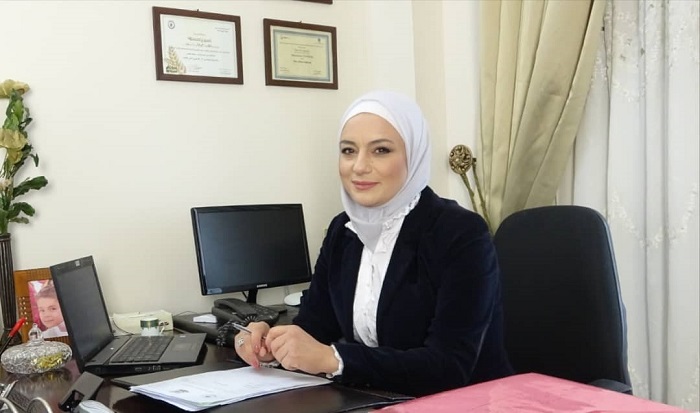
Syriatimes interviwed The Director of the Olive Office at the Ministry of Agriculture and Agrarian Reform Eng. Abeer Johar who talked to us about growing and harvesting olives.
She said “in the previous stage, this cultivation achieved a remarkable development in terms of the quantity and quality of production, and Syria reached the fourth rank in the world, where the production of olive oil in the year 2011/2012, according to the statistics of the International Olive Oil Council, was 198 thousand tons, ahead of Tunisia and Turkey, and Syria moved to the stage of exporting olive oil. with competitive quality specifications in global markets, but this tree was affected by the devastating war and its production decreased in the years of the crisis by almost 30% and fell to the seventh rank in the world.
The production has not exceeded 105 thousand tons currently as a result of climatic changes, especially drought, and the price of olives in the local markets has increased as a result of the high production costs, especially labor force, and due to the fact that the main production areas in the governorates of Aleppo and Idlib are out of government control” .
About the plan of the Ministry of Agriculture for this year Johar answered :
“One of the priorities of the Ministry of Agriculture in accordance with the strategy emanating from the Agricultural Sector Development Forum (Challenges and Opportunities) was to transform the olive sector into a profitable sector and attract investments and motivate farmers to continue the production process by reorganizing it administratively and technically, defining a strategic framework for the relationship between the public and private sectors and setting a national plan to improve the production of Syrian olive oil in quantity and quality.
 The olive harvest season began on 9/25/2021 in the coastal region to continue until the beginning of January 2022 in the northern and southern governorates, and therefore it is not possible to determine the final production quantities as long as the picking and pressing operations are not finished. It is expected, according to what was revealed during the last rounds during the harvest season, to be lower by about 10% of the initial estimates, which were estimated during the season 2021-2022.
The production of olives for the 2021-2022 season was estimated at about 645,331 tons, of which about 100,000 tons are allocated to table olives and 516,000 tons for oil production, a decrease of about 24% compared to last season, when olive production reached 850,341 tons.
The local market needs of olives is estimated at 70,000 tons, and therefore there is an export surplus estimated at about 30 thousand tons of table olives, and the local consumption of olive oil is estimated at about 60 thousand tons, which is a low amount compared to previous years.
The local consumption of olive oil is also estimated at about 60 thousand tons, which is a low amount compared to previous years due to the decrease in the per capita consumption rate to less than 2-3 kg annually due to low income and high olive and oil prices due to high production costs and lack of control over prices in local markets.
The Olive Office has set an executive plan to improve production in terms of quantity and quality, and works to direct technical support to farmers to provide the necessary agricultural services in the appropriate manner and time, in accordance with the current climate and environmental changes through awareness-raising workshops, and to contribute to securing these services at the lowest costs and to secure matching suitable olive plantations to standard specifications.
The Ministry aims to restore the lost damaged trees, in addition to updating the database on planted areas, number of trees, production and distribution of olive press and to evaluate the reality of work there , and to coordinate with other parties concerned with the olive oil manufacturing process in a manner that is commensurate with the level of international quality through monitoring the work of the olive press and filtering plants.
Repoted by Sanaa Hasan