
Ala at UNCTAD: War and sanctions imposed on Syria have impeded the country’s recovery and reconstruction efforts
Interference in the internal affairs of countries and threatening their legitimate political systems through supporting terrorism, imposing unilateral coercive measures, launching acts of aggression and occupying these countries and stealing their natural resources, poses a threat to multilateralism, violates the objectives of the UN Charter and threatens international peace and security as well as sustainable development efforts.
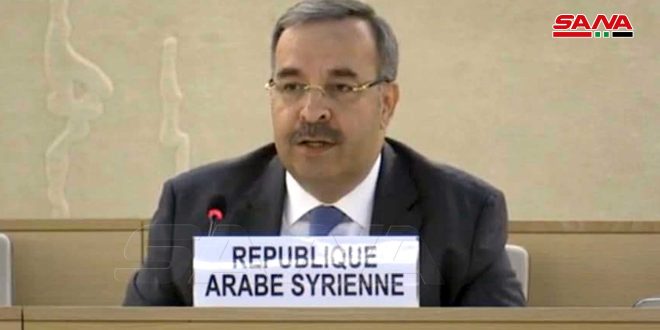
The remarks were part of a statement made by Syria’s Permanent Representative to the United Nations and other International Organizations in Geneva Husam Eddin Ala during the UN Conference on Trade and Development (UNCTAD).
Ala said that the terrorist war and the coercive measures imposed on Syria over the past ten years have caused huge humanitarian suffering to the Syrian people and massively affected Syria’s recovery and reconstruction efforts. They have also impeded the voluntary return of the Syrian refugees and prevented Syria from achieving the goals of the 2030 agenda of Sustainable Development.
The Syrian diplomat criticized the so-called “Caesar ACT” which was imposed on the Syrian people regardless of the humanitarian situation in the country. He said that adopting the Caesar Act by the United States during Coronavirus crisis provides an example of the arbitrary and unilateral use of economic and financial power for political pressure on other countries.
He called for not ignoring the obstacles facing the countries that are under occupation and are experiencing crises that affect their socio-economic development, noting the systematic violations being committed by the Israeli occupation against the International Humanitarian Law in the occupied Palestinian Territories and the occupied Syrian Golan.
He went on to say that the unprecedented challenges facing the world amid Corona pandemic crisis have deepened the imbalances and greatly harmed the global economy as well as the efforts to achieve sustainable development. He criticized the restrictions imposed on the developing countries’ access to health and medicine supplies that prevent these countries from obtaining vaccines, virus protection supplies, medical care and financial resources required to confront the impacts of the pandemic in light of the rising rates of poverty, malnutrition and foreign debts.
He pointed out that overcoming these challenges requires an international response based on solidarity and unity and on activating multilateral international cooperation in order to empower the developing countries and help them implement the 2030 Agenda for Sustainable Development and to create an international environment that allows developing countries to possess means of implementing this agenda.
He called for renewing commitment to the rules of international multilateral cooperation to confront the current crises and for rejecting the policy of resorting to unilateral coercive measures.
Hamda Mustafa