
Al-Aghbani handicraft … a Damascene story that toured the world and conveyed images of Syrian heritage
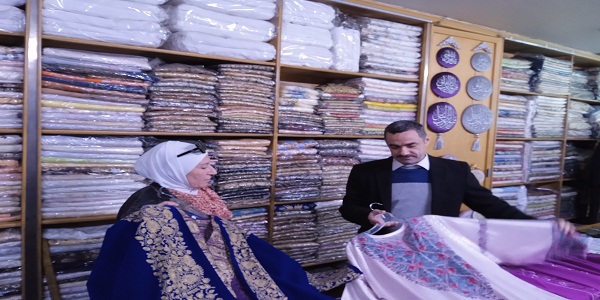
“Aghbani” is an ancient Damascene traditional craft that Syrians have mastered for more than 500 years.
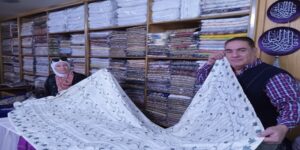 Today, Al-Aghbani is not just a fabric used in the manufacture of furniture or fashion, but rather an ambassador of Syrian heritage that reflects a long history of creativity and artistic excellence.
Syriatimes e-newspaper visited Mr. Maher Abdullah at his workshop in old Damascus who talked with pride and passion about this deep-rooted traditional craft which he inherited from his father and grandfather.
“Al-Aghbani is a Syrian craftsmanship heritage and an icon of traditional art. It did not lose its originality. Rather, it maintained the handcrafted spirit that makes each piece a unique work of art.” Mr.abadullah said.
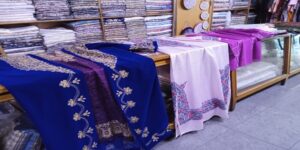 This craft, according to Abdullah, continues to inspire generations, as craftsmen adhere to their traditions and pass on their skills and knowledge from generation to generation, emphasizing the role of Al-Aghbani in shaping and preserving the identity of Syrian culture.
“we still work on using a hand-made machine (loom) that we learned at our homes before we continued to pass it on to our children, so that they in turn can be creative in embroidering paintings and drawings on white pieces of cloth, with the difference that we used to work with natural silk and reeds, but now we have replaced that with artificial silk.” Abdullah said.
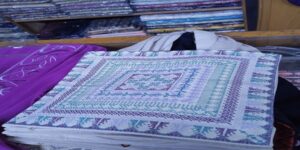
He pointed out that the manufacturing of Aghbani passes through three stages, the first of which is printing or drawing on the fabric, the second is filling the drawings with silk and reed threads, which is the most difficult and longest stage, and finally washing, ironing and cutting the excess threads.
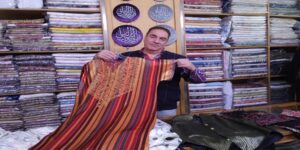 According to the craftsman Abdullah, different shapes, types, and decorations of the Damascene heritage that attract attention, especially Damascene roses can be embroidered on Aghabani products .
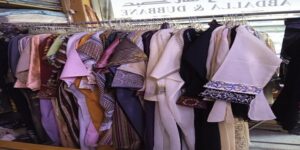
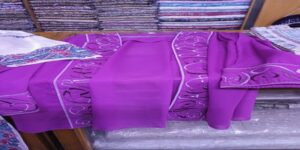
These products include tablecloths, head covers, and clothing, as well as bags, pillow cases, window curtains and many other items that are woven through special workshops spread in the neighborhoods of old Damascus.
He pointed out that what distinguishes Aghbani is the use of more than one color during embroidery, which may reach seven colors in some pieces such as bedsheets.
Although the craft of Al-Aghbani has developed greatly in recent years, and has become produced by ![]() computer, and relies on modern machines and new image compilations (catalogs), this development could not eliminate the role of hand embroidery carried out especially by women at their homes.
computer, and relies on modern machines and new image compilations (catalogs), this development could not eliminate the role of hand embroidery carried out especially by women at their homes.
 computer, and relies on modern machines and new image compilations (catalogs), this development could not eliminate the role of hand embroidery carried out especially by women at their homes.
Abdullah said “The Syrian craftsman who has been working with the Aghabani since ancient times has been distinguished by his sensitive sensitivity and ancient experience passed down through generations.
“Al-Aghbani remains a living symbol of authenticity and beauty, embodying the Syrian cultural heritage in all its components, and continuing to spread the message of Syrian creativity around the world, so that Al-Agbani’s heritage remains vibrant in every piece made with love and mastery.” Abdullah concluded.
Interviewed by : Rawaa Ghanam
Photos by : Rawaa Ghanam