
ACSAD Calls for Benefiting From Syria’s Experience of Self-Sufficiency of Wheat
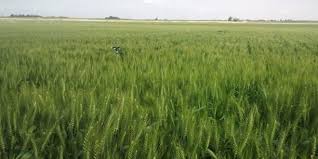
Tunisia – The Director of the Arab Center for the Studies of Arid Zones and Drylands (ACSAD) Dr. Rafik Ali Saleh called on the Arab countries to benefit from the Syrian experience in achieving self-sufficiency of the wheat crop as it was able to cover its local needs and producing surplus of materials.
This came during his participation in the activities of the Second Media Conference to Promote the Achievements and Activities of Joint Arab Action Organizations and Institutions, which was held in Tunis for three days. Dr. Saleh presented a work paper containing the role of ACSAD in the sustainable agricultural development processes in Arab countries.
Dr. Saleh pointed to the role of the ACSAD in the field of high-yield wheat and barley varieties, which are grown in hundreds of thousands of hectares in the Arab countries and are characterized by resistance to drought and disease and give good productivity at 300 mm rainfall annually.
He pointed out that the center provided the Arab countries with animals such as sheep and goats, and the means of expansion in artificial insemination in order to increase the productivity of local breeds.
Dr. Saleh explained that the center carried out a project to improve the services of palm orchards in 12 Arab countries through the establishment of typical guidance fields that contributed to the increase of productivity up to 35 percent and improve the quality of the product at a cost of about US $ 2 million.
He pointed to the projects implemented by the center for the harvesting of water through the establishment of water dams in many Arab countries and others to resist desertification and sand dunes stabilization by planting drought-resistant pastoral plants in addition to a project to raise the efficiency of irrigation in the Arab countries to reduce water deficit in addition to research on the use of sewage treated for irrigation of fodder crops and forest trees
Dr. Saleh pointed out that ACSAD is currently focusing on training Arab technicians through various courses in its fields of specialization, especially in the areas of irrigation methods development, the development of new varieties of wheat and barley, classification of soil and land use and development of sheep, goat and camel productivity.
Sh. Kh.