
A Syrian engineer designs a machine for picking cotton and wins a gold medal at Al-Basel Exhibition for Creativity and Invention
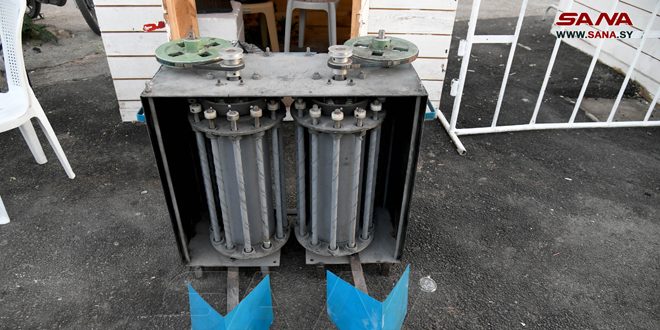
With the aim of saving effort, time and money while harvesting the cotton crop in Syria, a graduate of the University of Aleppo, engineer Hossam Issa Lattouf, designed and implemented a cotton harvesting machine, through which he won the gold medal in the 21st session of the Al-Basel Exhibition for Creativity and Invention for the current year.
Engineer Latouf from the Department of Agricultural Machinery at the College of Mechanical Engineering explained in an interview with SANA’s News Agency reporter that the idea of the project is a master’s thesis in the Department of Agricultural Machinery Engineering based on studying the possibility of applying the automated cotton picking system in Syria for the first time, as the research was discussed at the beginning of this year.
Engineer Lattouf stated that the automated cotton picking unit, which he tested on the Aleppo 118 type, consists of an automatic control unit connected to two transport and storage units, and it was designed using a set of engineering programs to calculate the diameters of the picking unit’s parts “spindles, drums, and cotton staple screws,” and was tested at maximum capacity as quickly as possible to ensure its technical condition.
Engineer Latouf also pointed out that after experimenting with the machine in the northern countryside of Aleppo, the results showed a reduction in the time required to pick cotton by 20 percent, compared to manual picking, in addition to saving picking costs, as the cost of picking of one hectare of cotton-cultivated area amounted to 250 thousand Syrian pounds in automated picking style, compared to 600 thousand Syrian pounds in manual picking style.
Not only that, the machine is also easy to by farmers, because it is operated from an agricultural tractor, while the imported harvesting machines need special conditions in the field, “such as a fixed distance between cotton lines,” because they are self-operated with four or six agricultural lines, and this doesn’t correspond to the reality of agriculture in Syria.
Regarding the cost of manufacturing it locally versus importing it, Engineer Lattouf explained that its cost locally is 88 percent less than the imported one, indicating that it can be obtained if requested within two months.
Leen Al Salman