
Decablus, A water tunnel in Horan plain… An archaeological historical marvel
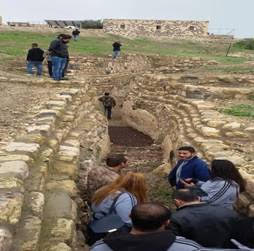
The historic tunnel Da’el – Umm Qais, the longest water tunnel in the world…
Da’el – Umm Qais tunnel is considered an underground water miracle that the Romans built to connect the cities of the Decablus to each other in order to supply them with water.
The cities of the Decablus, is a Roman alliance established by the Roman Emperor Pompey in 64 BC, which included ten of the most important cities of the Levant to stand against the influence of the Nabateans in the south. These cities are located in the middle and south of the Levant, within the borders of Syria, Jordan, and Palestine, and most of these cities were in Jordan.
The tunnel(Decablus),which is considered an underground water empire, extends 170 km between Jordan and Syria, and it is 9 times longer than the second longest tunnel in the world which is located in Italy.
The tunnel is described as a “heritage marvel” indicating the ancient civilizations that inhabited Horan, as the tunnel connects a group of villages in a unique water system fed by a group of heavy springs in Horan.
The Romans began to construct the tunnel in the second century AD of Emperor Hardian in the year 130 AD. The work lasted for, intermittently, more than eighty years.
It consists of two stages: the first phase, starts from Da’el in the western countryside of Daraa in the form of U in English in order to collect rain and spring water near it, passing through Daraa, Al-Tura, Kafarsoum, Samar, and Abder with it is valleys to Umm Qais in Jordan.
The second phase: which is called the sub. It starts from the Mugheer at Ain Al Mulaqa, in addition to many other springs and valleys. Its function is to bring more quantities of springs and rain to feed the ten cities and the baseline, especially in wartime.
 The tunnel contains rooms where the workers used to sleep, there is also a place to put lighting every two meters on the both side of the tunnel. The angle of inclination was also determined every one kilometer in order to withdraw water.
Graffiti in the Romanian and Arabic languages has been also found on the wall of the tunnel.
Amal Farhat