
EU, US Sanctions Negatively Impact Syrians Life – UN Res. Rep
SWEIDA,(ST)_ Resident Coordinator of UN activities in Syria Adam Abdul Mawla said that ” sanctions imposed on Syria by the USA and the EU negatively affect the lives of the Syrians,” especially in securing medicines and spare parts for maintenance of medical devices.
During a meeting on Saturday , accompanied by representatives of UN offices in Syria with Sweida ‘s governor Atef Naddaf , Abdul Mawla added “: Activities of UN offices in Syria are focused at the moment on the human side and humanitarian operations” to provide largest possible humanitarian aid and relief to those affected.
He detailed that the number of “beneficiaries of the aid provided by the UN through the World Food Program is about 5.2 million people, monthly , UNICEF services in the field of water purification are provided for 7 million people, and WHO provided drugs worth USD 70 million “.
He noted the efforts made by the Syrian government to ensure the needs of those affected, explaining that permits were issued for about 29 civil organizations and associations for national partnerships with UN offices, to ensure arrival of aid to those affected.
He continued that aim of his visit to Sweida is to identify the conditions , and hold consultations on the establishment of a UN office in the province, adding that one office was opened in Homs and other offices are due to be opened in Tartous, Aleppo and Qamishli.
Sweida ‘s governor underscored keenness to secure medicines for citizens, especially for chronic diseases, despite the blockade imposed by Western countries, pointing out that Sweida hosts 52 thousand displaced persons in five accommodation centers from other governorates who are given regular meals and health and education services .
The governor pointed to the difficulties faced by the province due to the terrorist attacks on trucks and convoys carrying food , flour and fuel to the province.
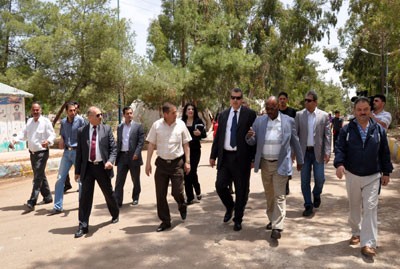
Then, the UN delegation visited the main accommodation center in Sweida and inspected the situation of those affected and a mechanism to provide humanitarian assistance to them .
T. Fateh