
Fattoush Salad
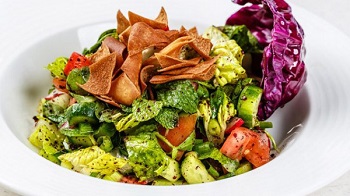
Fattoush is considered as one of the most famous kinds of salads in Syria and in the Middle East countries.
This Syrian Fattoush Salad is the quintessential salad that you’ll find at all Syrian restaurants that most people like to eat. It is always served as an appetizer, along with tabbouleh and hummus!
So, in Arabic, the word “fattoush” is derived from the Arabic “fatteh” which literally means “crumbs.”
The most important components of fattoush are: cuts of tomato, cucumber, radish, sumac, and thin fried pieces of khubz (Arabic flat bread), that make it the favorite salad, and no mezze is complete without it.
fattoush can be served in so many ways for example with lettuce or grape leaves, wrap them in a small piece and eat them.
Ingredients:
½ cup chopped parsley leaves
½ cup chopped mint leaves
2 tomatoes, chopped into chunks
¼ cucumber, chopped into sliced
1 red onion, sliced
4 garlic clove, crushed
1 small head lettuce
1 Arabic flat bread
1 tsp sumac
1 tbsp red wine vinegar
2 tbsp olive oil
1 tbsp lemon juice
Preparation:
Dressing
Combine sumac with lemon juice, pomegranate molasses, garlic, 2 tsp. vinegar, and dried mint in a small bowl. Gradually add oil, whisking constantly, until well blended. Season with salt; add more lemon juice, pomegranate molasses, and vinegar to taste, if desired.
Salad
1-Place bread pieces in a medium bowl; pour oil over and toss to coat. Season the bread with salt to taste.
2- Mix tomatoes and next 6 ingredients in a large bowl. Add 3/4 of dressing; toss to coat, adding more dressing as needed, and season with salt.
3-Add bread; sprinkle sumac over, and serve.
H.Z.