
Molokhyeh
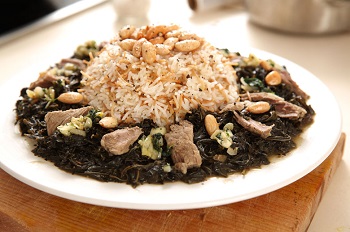
Molokhyeh is the leaves of Corchorus olitorius, commonly known as (Nalta jute or tossa jute). It is popular in the Middle East, East Africa and North African countries. Mulukhiyah is rather bitter and generally eaten cooked not raw or as a soup. Most people think that mulukhiya’s originates from Ancient Egypt but there is evidence that India is the source of it.
The health benefits of Mulukhiyah are many, the leaves are rich in Folic acid, beta-Carotene, Iron, Calcium, Vitamin C and more than 32 vitamins, minerals and trace elements.
There are two stories that explain the naming:
The first is the mallow was an ancient plant called “Khaya“in the era of the Pharaohs. The verb “eat” means “Malo” and for that they said “Malo Khaya”.
The second story – and most likely – that the origin of the word Molokhia is “Kingship” This is because it was presented to the kings, and described as a medicine to the kings when they got sick.
How countries prepare Mulukhiyah:
In Syria and Lebanon, they dry the leaves to use them later. But in northern Lebanon, a dish called (mloukhiye b zeit), uses fresh leaves and shoots of the Nalta jute plant, cooked in olive oil, onions, garlic, tomatoes and chilli peppers; it is a popular summer side dish.
For Egyptian cuisine, they are prepared it with garlic and coriander and some sort of meat (chicken or rabbit, but lamb is preferred when available). The soup is served with white rice or Egyptian flatbread.
Bedouins have an old tradition of cooking the innards of a whole chicken is stuffed with herbs, spices and raw rice. Then boiled to create the broth for the molokhia soup which is served as: The molokhia soup, Arabic flat bread, the chicken (stuffed with flavored rice), additional plain rice, and a small bowl with a mixture of lemon juice and sliced chili.
In Africa, the dish is known as mutere (Luragoli) and the jute leaves are boiled in lightly salted water with ligadi (bicarbonate of soda), or munyu (traditional plant-based salt), then with other leafy vegetables such as likuvi, finally stewed with tomatoes and onions in oil.
In Cyprus the dish is known as molohiya. It is popular among the Turkish Cypriots. They cook the dry leaves in a tomato based broth with onions and garlic. Lamb on the bone or chicken with bone may also be added, lemon and potato are also used. It is served with sour dough bread.
Ingredients:
1- 200 g dry molokhia
2- 200 g beef or chicken meat
3- 100 g butter
4- 12 cloves garlic chopped
5- 1 onion chopped
6- 1 bunch fresh coriander
7- 1 teaspoon salt
8- 1 teaspoon black pepper
9- 1 stick cinnamon
10- 1 bay leaf
11- Several teaspoons mixture of spices (chili, red paprika, saffron, etc.)
12- 200 g rice
13- 1 large lemon
Preparation:
1. Molokhia should be boiled for an hour in water with pepper and butter. Remove from water and dry.
2. Heat the oil. Sauté the onions until translucent or slightly browned then add the chicken and sauté for about 2-3 minutes then add the spices. Continue to sauté until the chicken is nicely browned on all sides.
3. Add the broth and increase the heat to bring to a boil. Reduce heat to low and cook, covered, for 35 minutes.
4. If using boneless chicken, skip this stip. If using bone-in chicken, remove the chicken pieces and let cool. Once cooled, remove the skin and bones and pull the meat apart. Add back to the broth.
5. Add molokhia and a few teaspoons of the spice mix, then cook it all together for about ten minutes.
6. Add the chopped garlic, coriander and lemon juice directly into the soup.
7. Serve it with rice. If desired, add the juice of half a lemon.
Lara Kh.