
Putin: Russia Accomplished More than What It Expected in Syria
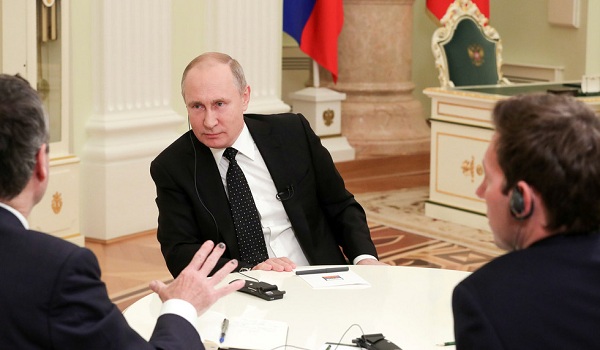
MOSCOW- Moscow’s decision to intervene in Syria, in the fall of 2015, was undertaken after a careful analysis of risks and potential rewards, because Russia could not stand by while an international terrorist organization (Islamic State, also known as ISIS) grew in its vicinity, Russian President Vladimir Putin said in an interview with The Financial Times.
“We have accomplished even more than I had expected,” Putin said according to RT. Several thousand militants from the former Soviet Union who joined IS were eliminated in Syria instead, improving Russia’s domestic security as well as helping stabilize the Middle East, he added.
Russia also established “very good, business-like, partner-like and largely allied relations” with other regional powers, such as Iran, Turkey and others, Putin added. The Russian military received practical experience it could not have obtained otherwise, he stressed.
Primarily … we have managed to preserve Syrian statehood, no matter what, and we have prevented Libya-style chaos there.
On the situation in Venezuela, Putin said there are Russian specialists and instructors in Venezuela, under the terms of a defense contract signed years ago, but there are no Russian troops there and Moscow is not “propping up” President Nicolas Maduro despite US accusations.
We do not meddle in things; it is none of our business… This problem should be sorted out by the Venezuelan people themselves. That is all.
He did call out the US and its allies for practicing modern-day “gunboat diplomacy” and wanting to “humiliate Latin American nations” into accepting leaders imposed from the outside.
“When a person enters a square, raises his eyes to the sky and proclaims himself president? Let us do the same in Japan, the US or Germany. What will happen? Do you understand that this will cause chaos all over the world?” Putin asked back, referring to the US-backed opposition leader Juan Guaido’s attempt to seize power in Caracas.
Elsewhere in the interview, the Russian President said that nuclear weapons pose a threat to international peace and security, but the crisis over North Korea is rooted in the “tragedies of Libya and Iraq,” that have “ inspired many countries to ensure their security at all costs.”
The real question is not how to disarm Pyongyang, but “how to make any country, including North Korea, feel safe and protected by international law that is strictly honored by all members of the international community,” the Russian president told FT.
If the international community shows respect for North Korea and ensures its security, “the situation may take a turn nobody can imagine today,” he added.
H.M