
Mona Lisa must have been FAKING her famous smile
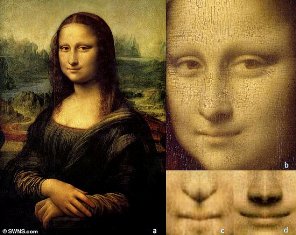
Mona Lisa’s famous smile ‘wasn’t genuine’ when Leonardo da Vinci painted her more than 500 years ago, according to research.
Scientists claim that her famous lop-sided grin reflects a non-genuine emotion, indicating the subject is lying, partly because her cheeks were not raised.
The portrait is arguably one of the most well-known works of art and inspires much debate, partly thanks to the subject’s ambiguous look, according to Daily Mail.
Art experts, scholars and tourists have for centuries pored over the 16th-century portrait to decipher what her expression means.
A team analysed the asymmetry of her enigmatic expression by applying neuroscientific principles, which studies disciplines dealing with structure.
Lead author Dr Luca Marsili, a neurologist at the University of Cincinnati, explained: ‘Our results indicate happiness is expressed only on the left side.
‘According to some influential theories of emotion neuropsychology, we here interpreted the Mona Lisa asymmetric smile as a non genuine smile – also thought to occur when the subject lies.’
Dr Marsili and colleagues asked 42 volunteers to judge which of six basic emotions were expressed by two altered pictures of her smile – one mirror image of the left side, and one of the right.
Thirty-nine, or 92.8 per cent, of the raters indicated the left half displayed happiness, while none felt this was shown on the right side.
Instead, 35 said the expression was neutral, five disgust and two said it showed sadness.
The researchers, who include Dr Lucia Ricciardi at St George’s University of London, also point out the upper face muscles are not triggered in the painting.
A genuine smile causes the checks to raise and muscles around the eyes to contract, and is called a Duchenne smile, after 19th century French neurologist Guillaume Duchenne.
Writing in Cortex, they said the asymmetric type, also called a non-Duchenne smile, ‘reflects a non-genuine emotion and is thought to occur when the subject lies.’
Dr Marsili added: ‘Considering it is unlikely a person who sits motionless for hours to be painted is able to constantly smile in genuine happiness, the simplest explanation is the Mona Lisa asymmetric smile is the manifestation of an ‘untrue enjoyment’ in spite of all the efforts Leonardo’s jesters used to make in order to keep his models merry.
‘An alternative intriguing possibility, however, is Leonardo already knew the true meaning of asymmetric smile more than three centuries before Duchenne’s reports and deliberately illustrated a smile expressing a ‘non-felt’ emotion.’
If da Vinci was aware of the meaning of an asymmetric smile, the researchers speculate Mona Lisa’s smile might hide cryptic messages.
For example, that this was in reality a self-portrait, which has been suggested before, or that it referred to a man or a dead woman.
‘While the Mona Lisa smile continues to attract attention of its observers, the true message it conveys remains elusive and many unsolved mysteries remain to be elucidated, perhaps via the knowledge of emotion neuropsychology.’
N.H.Kh