
Dr. Ibrahim Alloush to ST: Hot air won’t succeed in snatching away the hard-earned gains of Syrian Army and allies.
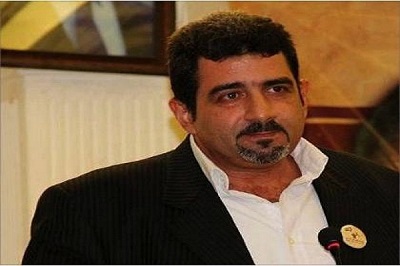
Arab political intellectual Dr. Ibrahim Alloush has affirmed that dealing with terrorist groups piece by piece, instead of dealing with them in bulk, saves lives and resources, but it does not in any way diminish Syria’s resolve to re-establish government control over every inch of Syrian soil in every far corner of the country.
His remarks came in an interview with the Syriatimes e-newspaper over the postponement of Idlib battle, Russian-Turkish summit held in Sochi, the ‘deal of century’ and the so-called ‘declaration of principles’ sheet on Syria.
Following is the full text of the interview:
ST-In the light of US-Turkish tension, do you expect a positive role by Erdogan or a new maneuver as per usual to keep his troops in Idlib as he reportedly reinforces observation posts in the said province?
Dr. Alloush: Erdogan’s policies in Syria since 2011 do not encourage any objective analyst to anticipate even a mildly positive role by his regime in Syria or the region as a whole. In fact, his Ottoman agenda to re-occupy the Levant, starting with northern Syria and Iraq, has loomed large as the primary locomotive of Erdogan’s policies in recent years. It is no surprise then that the victories of the Syrian Arab Army and its allies in the last few years, especially in Aleppo and the country-side of the provinces of Hama, Lattakia, and Idlib (in the last few months), has sent Erdogan reeling as he watched his whole strategy in Syria crumbling, with his terrorist groups getting defeated, the Syrian Arab Army advancing, and his main international ally, the U.S. government, playing a double game between him and Kurdish militias. Trump’s pressure on Erdogan, be it in the form of withholding promised arms shipments to Turkey, or in the form of economic sanctions on Turkish aluminum and steel, only contributed to isolating Turkey. The Saudi-Qatari conflict within the Gulf Cooperation Council also helped weaken Erdogan’s regional stature as his “Muslim Brotherhood” background set him against the Saudi-Emirates-Egyptian bloc along the Qatari side. It is against such a background that one has to see how Erdogan is clinging to the remnants of what he considers his accomplishments in Idlib and northern Syria. He even went as far as putting a longtime Turkish ally and crony such as “Al Nusra” terrorist group on Turkey’s terrorist list in the hope of getting along with Russia’s guidelines for a political solution in Syria. In short, Erdogan is trying to maintain as much influence and presence as possible in Syria in general, and in Idlib in particular. He is not to be trusted, but he is in a corner right now, so he has found some kind of rapprochement with Russia and Iran, especially as tensions escalate with the US.
The postponement of Idlib battle hinges on Turkey’s commitment to isolating Al Nusra and other similar groups
ST– How does that fit in with the outcome of summit between Erdogan and Putin in Sochi in which they agreed to establish a demilitarized buffer zone in Idlib, 10 to 15 kilometers wide, which is to be patrolled by the Russian Military Police along with Turkish troops?
Dr. Alloush: This means several things. First of all, it means that the battle of Idlib is being postponed. But, this postponement hinges on Turkey’s commitment to isolating Al Nusra and other similar groups which Russia deems bloodier and more terroristic than other terrorist groups that are closer to Turkey. Al Nusra and kindred groups, according to this agreement, are supposed to withdraw from Idlib, keeping in mind that they are THE main terrorist force in Idlib. Furthermore, heavy weaponry is to be withdrawn from the demilitarized zone. So what we have here basically is a postponement of the general attack on Idlib in exchange for isolating the main terrorist force in Idlib with Turkey’s approval. That’s doing politically a large part of the work that the Syrian Arab Army and its allies were going to have to do militarily. It is also part of Russia’s strategy to isolate Turkey from NATO and the US government. However, as far as Syria is concerned, dealing with terrorist groups piece by piece, instead of dealing with them in bulk, saves lives and resources, but it does not in any way diminish Syria’s resolve to re-establish government control over every inch of Syrian soil in every far corner of the country. Syria gave some less influential Turkish-supported terrorist groups an extension, like it did before in Eastern Ghouta, Eastern Aleppo, etc… so as not to have to deal with a united terrorist front, with an open strategic depth in Turkey, en masse. In short, Erdogan wouldn’t have struck such a deal even a year ago. Had he not been in crisis, he would have gone on with his arrogant hardline stance as before. Also, it is clear that such a deal would avert direct political conflict with the West which issued threats repeatedly in defense of terrorist groups in Idlib. The agreement between Erdogan and Putin, which wouldn’t have gone through without Syria’s approval, defuses the threats from West while setting the stage for regaining all terrorist-controlled territories in Idlib and adjacent provinces in the future. With such a deal, the West is left without the defunct pretext of “defending civilians in Idlib”.
 Kurds’ best bet is to reach understanding with Syrian army
ST -Does the delay of Idlib battle give a chance to Kurds and US to reach a new deal? And does this delay serve the Syrian state and allies?
Dr. Alloush: After what happened to Barazani in Northern Iraq, when he took measures to secede from Iraq, and the following defeat he suffered at the hands of the Iraqi Army, the Kurdish militias in Northern Syria must have learned their lesson: the US is not a reliable ally. Still, the US government tried to reassure these Kurdish militias by setting up military bases in Northeastern Syria. Yet the US is known to have abandoned its military bases before, as it did for example in Vietnam and other places. Thus the delay of the battle of idlib, especially along the terms specified in the agreement between Putin and Erdogan, is likely to prod the US to play the Kurdish card more vigorously, whether against Turkey or the Syrian Arab Army. So it is crucial that our Kurkish brothers and sisters understand that the US, no matter how long it stays here, is eventually leaving, and that their best bet therefore is to make amends and reach a mutual understanding with the Syrian Arab Army. Otherwise, they should remember that the US is not a reliable ally and that allowing themselves to be pawns in the game the US is playing will not bode well for them or the region as a whole.
Total war against Syria is not a walk in the park
ST -Is the potential US-led strike against Syria inevitable? What could such aggression achieve?
Dr. Alloush: Unless the US is willing to launch total war against Syria, not just limited aerial or rocket attacks, what it does will not shift the balance of power in its favor. So, the real question is: is the US willing to commit itself to total war against Syria? If the answer is no, then whatever the US does will take the form of a lot of Hollywood-style threats with the hope of swindling political gains that it the US is neither willing nor able to foot the bill for. Otherwise, keep in mind that total war against Syria is not a walk in the park, considering the mishaps of the US’s military adventures in Iraq and Afghanistan most recently, not to mention injuring Russia’s pride deeply, which is very risky business.
The ‘deal of century’
ST -To what extent do the current developments in Syria and in the region affect the implementation of the ‘deal of century’?
Dr. Alloush: Had things gone the way the US and “Israel” wanted in Syria, the stage would have been set for implementing the so-called “Deal of the Century”, that is, resolving the Palestinian question on Zionist terms. So far, the general scene in the Arab World, mired in bloody and internal conflicts, weakening Arab central states, marginalizing the Palestinian cause, and debilitating Arab armies, is what allowed something like the so-called “Deal of the Century” to be even discussed, even though nobody knows what is yet, except that it involves giving away Jerusalem, the right of return, allowing settlements in the West Bank to stay and expand, etc.. Therefore, Syria’s victory definitely impedes the imposition of this “Zionist solution to the Palestinian question”, as it should. There is no doubt that its support of resistance movements is another impediment to implementing such deals.
The bravado of the West
ST- Regarding the leaked “declaration of principles’ sheet on Syria, what is the purpose of presenting such a useless sheet as Syrian army and allies are winning on the ground?
Dr. Alloush: Such a “declaration of principles” doesn’t really mean much in practical terms, especially that Syria and its allies have the upper hand on the ground. The West thinks that it holds the leverage of “reconstruction aid” over Syria. But Syria hasn’t even requested aid from the West. This so-called “declaration of principles”, therefore, is meant to send the message that the West and its regional allies are “coming down hard on Syria”, and that they “really mean business”.. but this is just mere bravado and bombastic posturing. Hot air will not succeed in snatching away the hard-earned gains of the Syrian Arab Army and its allies on the ground.
Related links:
http://syriatimes.sy/index.php/editorials/opinion/34014-ibrahim-alloush-to-st-france-saudi-arabia-share-with-us-its-goal-of-seeing-syria-destabilized-fragmented
http://syriatimes.sy/index.php/editorials/opinion/36506-dr-ibrahim-alloush-to-st-us-policy-of-provoking-others-constantly-may-lead-to-total-war
Interviewed by: Basma Qaddour