
Deadly Effects of Certain Kinds of Household Air Pollution
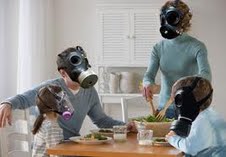
Almost four million people die each year from household air pollution (HAP) caused by exposure to the combustion of biomass fuels (wood, charcoal, crop residues, and dung), kerosene, or coal. These individuals are among the tens of millions who rely on such products to cook their meals, heat their rooms, and light their homes. Those in lower and middle income countries are among the hardest hit by the effects of HAP exposure, which also causes childhood respiratory infection, chronic lung disease, and cardiovascular disease. Exposure to biomass fuel is associated with low birth weight, asthma, and tuberculosis.
Given these effects, the large populations at risk, and a growing global interest in lower-cost energy sources, researchers from three continents have published a comprehensive overview of the current approaches to HAP assessments, the aims of biomarker development, and the state of development of tests which have the potential for rapid transition from the lab bench to field use. The effort is being led by William J. Martin II, MD, Associate Director for Disease Prevention and Health Promotion, and health institutions, their findings are addressed in the article, “Household air pollution: a call for studies into biomarkers of exposure and predictors of respiratory disease,” which is published online by the American Journal of Physiology-Lung Cellular and Molecular Physiology.
Current approaches to HAP assessment, challenges
The researchers found that current HAP assessment tools include direct quantitative measurement of products of incomplete combustion, as well as qualitative methods (including use of questionnaires or the categorization of HAP exposure by type). However, direct exposure assessments via personal monitoring are problematic due to the size, portability and recording capacity of equipment, and acceptability to the user.
Despite the new devices currently being field tested and scaled up for commercial use to address these concerns, specific particulate measurement alone cannot differentiate between the multiple sources of pollution such as mixtures of HAP, tobacco smoke, and outdoor pollution. “The grand challenge to the research community is to produce simple and validated tests that better identify populations that are at risk from HAP, and individual responses to exposure reduction strategies,” according to Dr. Martin.
The researchers also found that current HAP exposure measurement methods are expensive, technically challenging, difficult to use with large population studies, and have substantial limitations, making an urgent case for the development of biomarkers of both exposure and health effects. These findings have led to their call for studies into biomarkers of exposure and predictors of respiratory disease.
Martin and his colleagues note that further development of biomarkers of susceptibility and effect could facilitate large scale studies examining the impact of HAP on health and disease in human populations. In the end, new biomarkers would: (a) improve epidemiological accuracy in association studies with health effect; (b) reduce the cost and complexity of monitoring intervention studies; (c) provide data for educating the public and policymakers about risk; and (d) inform clinicians and the public health community about human environmental exposures that are not well characterized.
Source: sciencedaily
B.N