
Iran Has Emerged as Major Player in Resolving Crisis in Syria, Diplomat Says
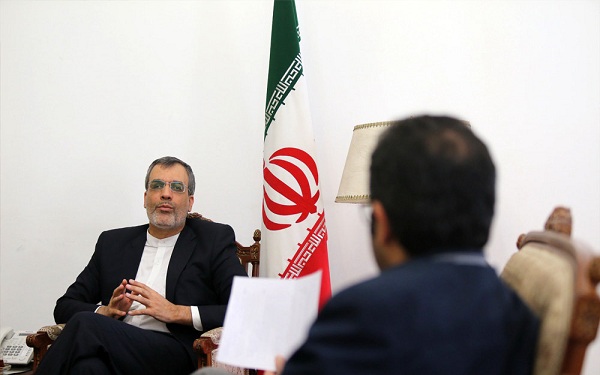
TEHRAN – Iran has become a significant player in resolving the crisis in Syria thanks to Dr. Zarif’s renewed efforts, Deputy Foreign Minister Hossein Jaberi Ansari says.
In an interview with the Shargh newspaper published on Wednesday, Jaberi Ansari lauded Foreign Minister Zarif’s role in boosting Iran’s strategic weight in the region, saying the Astana talks are one of the outcomes of Tehran’s dynamic foreign policy.
Russia, Iran and Turkey brokered a Syrian peace initiative in the Kazakh capital of Astana in the beginning of 2017. Ever since, the Astana talks have brought representatives from the Syrian government and opposition groups to the negotiating table in order to find a solution to the Syrian crisis.
So far, the opposing sides have convened at the Kazakh capital five times with the sixth round due to take place at the end of August.
“Since the beginning of the Syrian crisis, we’ve been saying that we do not oppose the legitimate demands of the Syrian people… What is opposed by the Islamic Republic of Iran is the foreign intervention which imposes others’ will on the Syrian government and people,” Iran’s point man for Middle East stated.
He also voiced Iran’s opposition to using terrorism as a tool in order to achieve certain political aims.
“Since the beginning, we have not opposed demands for change and reform and regarded such demands as indisputable rights of those portions of the Syrian people who wished for change and reform.”
The official said the crisis in Syria is a result of certain foreign countries’ retaliation against the Syrian government for wishing to remain independent.
He also highlighted the need to differentiate between terrorist groups and the opposition groups, saying Iran has been paying more attention to this issue in recent years.
The senior diplomat noted that contacting some opposition groups and figures has been on the agenda of Iran, adding, “Under the framework of Astana [talks], such efforts have become more noticeable.”
“When Iran sits at the negotiating table beside Russia, Turkey, and the Syrian government and opposition, it means that [Iran] has implicitly recognized the existence of the Syrian opposition,” he remarked.
He added that it goes the other way around too, as the Syrian opposition has acknowledged the need for the other side’s effective role in order to resolve the crisis.
“If we want to move toward resolving the Syrian crisis and ending the militaristic situation as well as the civil war in Syria, there’s no way except for reaching a comprehensive, multilateral policy.”
On May 4, Russia, Iran and Turkey signed a document during the fourth round of the Syrian talks in Astana to establish four “de-escalation zones” in Syria.
On Tuesday, representatives of the three countries gathered in Tehran to kick off a new round of meetings devoted to strengthening de-escalation zones.
The de-escalation zones, envisioned as places where displaced Syrian civilians could voluntarily return and settle, include the northern province of Idlib, the central province of Homs, the East Ghouta region outside Damascus, and southern Syria along the Jordanian border.
TEHRAN TIMES
RS