
Western Sanctions Drive Aleppo Maternity Hospital to Critical Condition
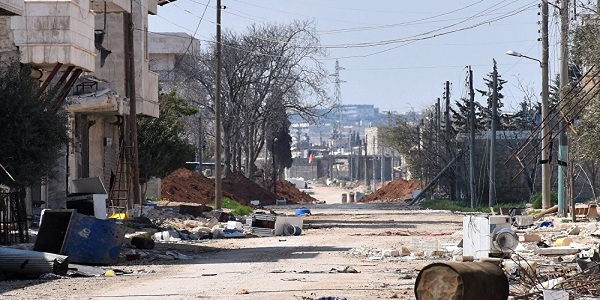
It’s not just war and terrorism that have contributed to destruction in Syria and to the destabilization of its economy. Punitive measures imposed by the US and the EU have transformed a once prosperous country into an aid-dependent nation. The chief doctor of a government-run maternity hospital in Aleppo revealed the struggling conditions the hospital has found itself in.
It was not long ago that Aleppo was liberated from terrorists. The raging war however was not the only horror which devastated the city. Officials also blame the sanctions, introduced by the US and the EU, for the desperate need of medical equipment, fuel, food and building materials.
The punitive measures of the West have severely restricted pharmaceutical imports, even though medical supplies are largely exempt from the imposed measures.
Lina Allouzi, a chief doctor of a government-run maternity hospital in Aleppo, revealed the dire situation in the medical institution.
“Up to 20 babies are being born in our maternity house daily. More girls are being born and this gives us joy and hope that peace will come here soon,” Doctor Allouzi told journalists.
She said that even in these conditions the hospital can boast a radiology room, special equipment for medical examinations and a unique laboratory. All the services and medication provided by the medical facility are free of charge. Expectant mothers come there from all over the province and the medical personnel work flat-out.
However the equipment which had been, bought abroad before the war, is often out of order due to the frequent blackouts in the city.
“The microscope in the laboratory is out of order and I am really worried about the efficiency of the care units for premature babies,” Doctor Allouzi said.
She noted that due to the sanctions imposed by the EU and the US, it is practically impossible to buy spare parts for the equipment produces in Germany, the US and France. Thus the country’s handymen try to “resurrect” the expensive equipment.
The sanctions also blocked the supplies of medication to maternity hospitals, however Doctor Allouzi said that Syrian pharmacologists have been able to produce some medicine locally.
Interestingly enough, back in September 2016, the US-based news website The Intercept obtained a UN internal report which revealed that the US and European sanctions “blocked access to blood safety equipment, medicines, medical devices, food, fuel, water pumps, spare parts for power plants, and more.”
The news website also obtained an internal UN email which “faults US and EU sanctions for contributing to food shortages and deteriorations in health care.”
The EU has imposed wide-ranging prohibitions on commercial dealings and banking cooperation with Syria as well control the export of “dual use” items that might have some security application.
US sanctions are even more extensive, imposing a blanket ban on exports to Syria or financial dealings with the country. This includes foreign produced goods of which the US content is more than 10 per cent of the value of the finished item. There are supposedly means available for purely humanitarian goods to reach Syria, but in practice this is not the case.
On May 29, 2017, the EU extended its restrictive measures against the Syria until June1, 2018.
Source: Sputnik
H.M