
US Pulling out Troops from Afghanistan, Sending Weapons to terrorists in Syria
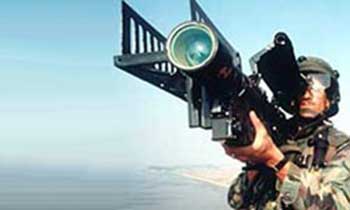
The US is sending the artilleries, armored vehicles and different weapons systems of its troops pulled out from Afghanistan to the terrorist groups in Syria, a ranking US military source disclosed on Saturday,according to FNA.
A ranking member of the US marine troops deployed in Afghanistan told FNA on Saturday that the Pentagon made the decision to send a major part of its light and semi-heavy weapons systems and military equipment to terrorists in Syria along with its pullout from Afghanistan when the former US Defense Secretary, Leon Panetta, was still in office.
“The decision to send our arms and weapons systems in Afghanistan to the terrorist groups in Syria was originally made when the former US Secretary of Defense was in his final days of office, yet the Pentagon has also received the approval of the new Secretary, Chuck Hagel, as well,” said the source who asked to remain anonymous due to the sensitivity of his information.
“One of these cargos consists of the light and semi-heavy military tools, equipment and weapons that the US army has gathered and piled up in Kandahar Base and plans to send them to the terrorists in Syria in the form of several air and sea cargos and through Turkey and specially Jordan,” he explained.
“These weapons and arms systems include anti-armor and missile systems, rocket-launchers and rockets and tens of armored Humvees,” the source added, explaining that senior war strategists in the Pentagon believe that they can change the scene of the war in Syria in the interest of the terrorist groups with the help of these cargos, specially the shoulder-launched missile systems and the multipurpose Humvee vehicles.
The High Mobility Multipurpose Wheeled Vehicle (HMMWV), commonly known as the Humvee, travels as fast as 150 kilometers per hour under different weather conditions and in various geographical climates, and various types of machineguns, rocket-launchers and weapons systems can be mounted on this vehicle.
HMMWVs serve as cargo/troop carriers, automatic weapons platforms, ambulances (four litter patients or eight ambulatory patients), M220 TOW missile carriers, M119 howitzer prime movers, M1097 Avenger Pedestal Mounted Stinger platforms, MRQ-12 direct air support vehicles, S250 shelter carriers, and other roles. The HMMWV is capable of fording 2.5 ft (76 cm) normally, or 5 ft (1.5 m) with the deep-water fording kits installed.
Optional equipment includes a winch (maximum load capacity 6,000 lb (2,700 kg)) and supplemental armor. The M1025/M1026 and M1043/M1044 armament carriers provide mounting and firing capabilities for the M134 Minigun, the Mk 19 grenade launcher, the M2 heavy machine gun, the M240G/B machine gun and M249 LMG. The M1114 “up-armored” HMMWV, introduced in 2004, also features a similar weapons mount. In addition, some M1114 and M1116 up-armored and M1117 Armored Security Vehicle models feature a Common Remotely Operated Weapon Station (CROWS), which allows the gunner to operate from inside the vehicle, and/or the Boomerang anti-sniper detection system.
The New York Times said in an article in August that “(US) troops are already departing, and military planners are carefully calculating how to extricate the equipment smoothly. In all, officials estimate, they will have to wrangle 100,000 shipping containers of material and 45,000 to 50,000 vehicles like tanks and Humvees from all across Afghanistan”.
According to a timetable set by President Obama, the United States withdrew about 23,000 troops from Afghanistan by October, leaving about 68,000 American troops. There are about 13,000 Marines, down from about 20,000, and the United States said publicly that this number fell to around 7,000 by October.
In the Southwest, the number of coalition bases is falling to about 70 from 214 in March, 2012.
As the US continues its pullout from Afghanistan, terrorists in Syria have failed to make any more advancement and the US, EU, Saudi Arabia and Qatar were forced to soften their tone on the future of the almost two-year-long conflict in the country after they found that the war of attrition has rather worked in the interest of the Syrian government.
This, military experts say, has apparently made the US change the war strategy in Syria and open new fronts in the country.
The US and its allies have been sending most of their arms cargos to the rebels through Turkey, which neighbors Northern Syria. Just last week a Libyan member of the al-Qaeda disclosed that France has supplied the rebel and terrorist groups in Syria with Russian Igla anti-air missiles and even trained them how to use these systems.
“After that the French found some of the Libyan army officers who had been trained to use Igla missiles and in September 2012 they used these offers for training a number of al-Qaeda terrorists who ran operations in Syria,” Trablosi explained.
“Then” he said “the French transited these al-Qaeda members and the Igla anti-air systems from Benghazi to the Southern provinces of Turkey on a Bulgarian cargo plane and then ferried them across the border into Syria.”
But after the US witnessed that the Northern front has failed to overpower the Syrian Army, it has now changed strategy to intensify arms aid to different rebel groups across the country to open new front, especially in the South.
M.D