
Could Artificial Blood soon Be on Tap?
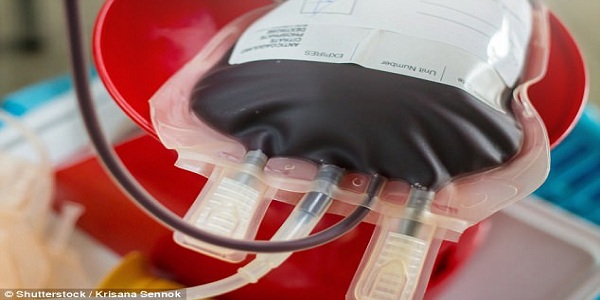
Artificial blood grown in the lab could one day be available on tap thanks to a new scientific breakthrough. According to Daily mail
Researchers used early-stage stem cells, known as immortal cells, to grow billions of red blood cells in the lab.
The new technique could one day be used to help patients with rare blood types, the researchers said.
Artificial production traditionally relies upon a type of stem cell that usually manufactures red blood cells in the human body.
But researchers discovered a new method of producing blood using ‘immortal’ stem cells.
The researchers created ‘immortal’ cells by manipulating stem cells in a way that ‘traps’ them in an early stage of development.
When stem cells are in an early stage, they can frequently divide to create an unlimited number of cells.
In contrast, the stem cells traditionally used can only make 50,000 red blood cells before dying off.
A typical bag of blood used in hospital contains around a trillion red blood cells.
Dr Jan Frayne, said: ‘Previous approaches to producing red blood cells have relied on various sources of stem cells which can only presently produce very limited quantities.
By taking an alternative approach we have generated the first human immortalised adult erythroid line and in doing so, have demonstrated a feasible way to sustainably manufacture red cells for clinical use from in vitro culture.’
‘Globally, there is a need for an alternative red cell product.
Cultured red blood cells have advantages over donor blood, such as reduced risk of infectious disease transmission.’
But although the researchers have the ‘biological tools’ need to produce blood on tap, they are yet to develop a cheap and large-scale manufacturing process.
NHS Blood and Transplant needs to collect 1.5 million units of blood each year to meet the needs of patients and the ongoing need for life saving blood donations remains.
It could still be many years before manufactured cells could be available on such a large scale, the researchers said.
They added that small-scale production could be developed to support those with rare blood types.
Professor Dave Anstee, said: ‘Scientists have been working for years on how to manufacture red blood cells to offer an alternative to donated blood to treat patients.
The first therapeutic use of a cultured red cell product is likely to be for patients with rare blood groups because suitable conventional red blood cell donations can be difficult to source.
‘The patients who stand to potentially benefit most are those with complex and life-limiting conditions like sickle cell disease and thalassemia, which can require multiple transfusions of well-matched blood.
‘The intention is not to replace blood donation but provide specialist treatment for specific patient groups.’
The first trials of manufactured blood transfusion will take place later this year.
But these trials will use artificial blood developed in the traditional method rather than the technique used in the current study.
N.H.Kh