
Could this prevent heart failure? Tiny robot that ‘hugs’ damaged organs to help them beat could save thousands of lives
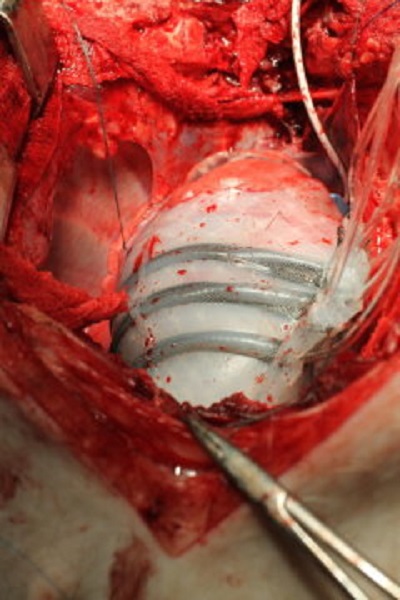
A revolutionary new ‘soft robotic heart’ that fits like a glove around the organ could help people with heart failure according to Daily mail.
Conventional mechanical hearts pump the patient’s own blood through their body using a propeller.
But the problem with this is that the pump comes into contact with the patient’s blood – putting it at risk of clotting. This needs to be controlled using blood thinning drugs.
The new design fits outside the patient’s own heart like a glove, squeezing it to make it beat.
It can work because many people with damaged hearts have not lost all function.
The soft silicone device, which ‘hugs’ the damaged heart, is the fruit of research in ‘soft robotics’ – mechanical structures designed to mimic soft body structures.
It stiffens and relaxes when inflated with pressurised air.
Around 41 million people worldwide suffer from heart failure, usually developing the condition after suffering a heart attack.
It is already the leading cause of hospitalisation among over-65s – and experts predict the number of elderly people with the condition will triple by 2060.
Artificial hearts – also known as ventricular assist devices – have the drawback of being in constant contact with the blood.
This raises the risk of infection, clotting and strokes. It also disrupts the normal curvature of the heart and alters the way it contracts.
The device restored blood flow after cardiac arrest in six living pigs. The device could also be ‘fine tuned’ to twist and compress either the right or left heart ventricle in hearts.
This is crucial as in many cases of chronic heart failure, just a portion of the organ is affected. Further work is necessary before the technology is ready for use in humans, the authors say.
Lead author Ellen Roche, formerly said: ‘This research demonstrates that the growing field of soft robotics can be applied to clinical needs and potentially reduce the burden of heart disease and improve the quality of life for patients.
‘This work represents an exciting proof of concept result for this soft robot, demonstrating that it can safely interact with soft tissue and lead to improvements in cardiac function.’
The device took inspiration from the heart itself.
The thin silicone sleeve uses soft pneumatic bands placed around the heart to mimic the outer muscle layers of the mammalian heart. The bands twist and compress the sleeve in a similar motion to the beating heart.
The device is tethered to an external pump, which uses air to power the inflating bands.
Frank Pigula, a heart and lung surgeon and co-author of the study, said: ‘The cardiac field had turned away from idea of developing heart compression instead of blood-pumping VADs [ventricular assist devices] due to technological limitations, but now with advancements in soft robotics it’s time to turn back;
‘Most people with heart failure do still have some function left; one day the robotic sleeve may help their heart work well enough that their quality of life can be restored.’
N.H.Kh