
Minnesota Plans to Legalize Marijuana to Help PTSD Patients
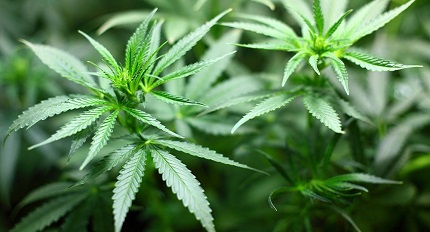
Minnesota citizens will be allowed to use medical cannabis for post-traumatic stress disorder beginning summer 2017, according to the state’s Department of Health.
The Minnesota Department of Health has legalized the use of medical cannabis for the treatment of post-traumatic stress disorder Post-Traumatic Stress Disorder (PTSD), a condition of crippling anxiety that follows a traumatic event, including a car accident, a criminal attack, or combat, according to Sputnik.
According to Department of Health Commissioner Ed Ehlinger, “This decision was made after careful deliberation of available evidence, consultation with experts in the field and public input.”
“While the process of reviewing these potential additions was difficult due to the relative lack of published scientific evidence, PTSD presented the strongest case for potential benefits. PTSD also has few effective treatment alternatives available for some patients with the condition,” he added.
Cannabis, when used under controlled circumstances, is known to assist patients to reach a state of deep relaxation. It is also known to be an effective painkiller that allows for an altered perception of time.
The use of cannabis, however, like other drugs, can cause anxiety when the effect begins to wear off. Medical experts counsel a combination of drugs and psychological therapy to counter PTSD.
The Minnesota Department of Health examined the use of cannabis to treat other conditions including depression, arthritis and autism-spectrum disorders, but has not yet secured proof of the material’s effectiveness, according to Ehlinger. Minnesota state authorities will ease trade restrictions on cannabis beginning next summer. Topical patches, creams and lotions will be allowed, in addition to oils, capsules and vapors currently available for sale. Currently, cannabis is available by prescription to help patients suffering from severe pain. The Department of Health does not expect any significant spike in registered patients after PTSD is added to this program, Ehlinger said.