
Shells could be 200 MILLION years older than we thought
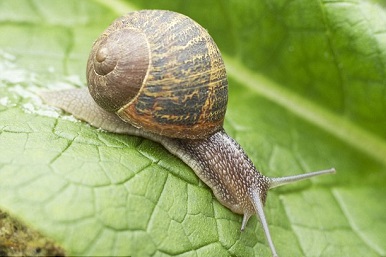
From giant Galapagos tortoises to the humble sea snail, animals have been using tough shells to protect their soft bodies for millions of years.
But the fossilised remains of ancient microbes have revealed the first shells may have emerged 200 million years earlier than previously thought.
Geologists claim to have found evidence of some of the earliest shell formation in biological history.
The fossils are believed to be more than 800 million years old and show the evidence of biomineralisation – the process by which organisms create a hardened mineral for support and protection.
The ability of organisms to create these tough mineralised materials is seen as a key milestone in the evolution of eukaryotes – those organisms with a nucleus, such as plants, animals and fungi, but excluding bacteria and viruses – and was thought to have first emerged 560 million years ago.
High resolution imaging of the fossils revealed a network of highly organised, interwoven crystals which appear to be under biological control, as in purposely grown by the cells.
Analysis placed the fossils within a window of 717 to 811 million years old. But analysis of shale beneath them narrowed the age to 809 million years old, with a few million years error.
What’s more, the minerals of the ancient microbial ‘shells’ are different to modern shells, being made up of calcium phosphate rather than calcium carbonate.
This mineral, the same as that found in teeth, isn’t used by microbes today due to its relative scarcity in the environment compared to carbon. But the fossil was likely used in the past when geologists believe phosphor containing molecules were more abundant.
If confirmed, the findings would make these creatures the earliest eukaryotes to produce a shell.
Dr Phoebe Cohen, a paeleobiologist, who carried out the research, said ‘We have been able to identify specific conditions that facilitated the evolution of the first eukaryote to biomineralize in Earth’s history.’
‘It paints a beautiful picture of the ecology and evolution and environmental conditions that led to this dramatic innovation.
Source: Daily mail
N.H.Kh