
Mosquito preference for human versus animal biting has genetic basis
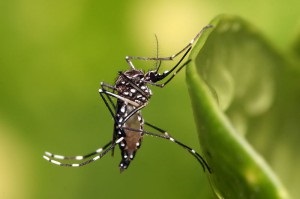
Mosquitoes are more likely to feed on cattle than on humans if they carry a specific chromosomal rearrangement in their genome. This reduces their odds of transmitting the malaria parasite, according to a study.
Rates of malaria transmission depend on whether mosquitoes bite humans or animals, and whether they rest after that meal in an area where they will encounter pesticides.
Bradley Main, a researcher in the Vector Genetics Lab, and his colleagues investigated whether there is a genetic basis to host choice and resting behavior in Anopheles arabiensis.
That species of mosquito has become the primary vector of malaria due to the frequent use of pesticide-treated bed nets, which kill other species that live closely with humans.
“Whether there is a genetic basis to feeding preferences in mosquitoes has long been debated,” Main said. “Using a population genomics approach, we have established an association between human feeding and a specific chromosomal rearrangement in the major malaria vector. This work paves the way for identifying specific genes that affect this critically important trait.”
Using genetics to help stop malaria’s spread
Using genetics to better understand and track mosquito behavior can improve local control strategies. This knowledge may also open novel avenues for stopping malaria’s spread, such as genetically modifying mosquitoes to prefer cattle over people.
The researchers sequenced the genomes of 23 human-fed and 25 cattle-fed mosquitoes. They identified a genetic component that contributes to the mosquito’s host choice but not its choice of resting place.
They narrowed down the gene region associated with cattle feeding to a chromosomal rearrangement called the 3Ra inversion.
The study is the first to use genomic tools to find a genetic basis for earlier observations that inversions can be linked to a preference for cattle in mosquitoes.
While the findings provide strong support that the inversion in An. arabiensis is linked to cattle feeding, researchers need to test a larger geographic area to confirm the connection.
N.H.Kh