
FAO asks for $87 million to support farming and livelihoods in Syria
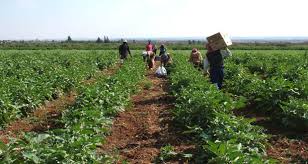
Rome — As world leaders met in London recently to raise funds in support of millions of people affected by the ongoing crisis in Syria, FAO stressed the urgent need to help farming families produce food to meet basic needs.
Within Syria, 8.7 million are in need of food security assistance, out of an estimated 13.5 million people who continue to be in need of urgent humanitarian assistance.
“It is clear that imported food assistance alone cannot feed the country — that’s why maintaining food production amidst this conflict is so critical,” said FAO Assistant Director-General Laurent Thomas.
“Farmers want to stay on their land – but if we fail to support them, they will have no choice but to abandon their farms, joining the growing contingent of refugees and internally displaced people in search of food, shelter and income opportunities elsewhere,” he added.
In all, half of the people that remain in Syria today do not have enough food to eat and are unable to meet their basic food needs.
Moreover, in the past 18 months, prices for wheat flour have tripled in some markets inside Syria and rice prices have risen more than six fold.
Unemployment, and the inflation, meanwhile, have further eroded the capacity of families to feed themselves and cope amidst the crisis.
Massive displacements and migration of rural populations are progressively depriving the rural sector of its human capital and much needed skills, contributing to a vicious circle where lack of protection, erosion of livelihoods base and loss of economic opportunities become inextricably linked.
The livestock sector, too, has taken a significant hit, with 30 percent fewer cattle, 40 percent fewer goats and only half the number of poultry left in 2015, compared with 2011, as infrastructure is destroyed, animals fall sick or are looted, or families are forced to sell or slaughter their livestock to cope.
As part of the UN’s $3.18 billion Syria Response Plan, FAO is asking for $87 million to support 2.9 million vulnerable people improve their access to food, better nutrition and income through 2016
Last year, FAO reached 1.5 million people across the country with distributions of wheat and barley seeds, vegetable production kits, and live poultry. Animal feed and livestock vaccination campaigns, in turn, have kept remaining herds healthy while vulnerable families who have lost livestock benefited from distribution of sheep to rebuild their livelihoods
Investing in the capacity of farmers to produce food locally is not only effective in improving the food security of people who have remained in Syria but also in preventing further migration in the coming months
Only $200, for example, allow a farmer to produce enough wheat to feed a family of six for a year.
And yet, emergency agricultural interventions were 70 percent underfunded in 2015.
Prep By: Sh. Kh.