
Feeding the World’s Cities: ACritical Challenge for Sustainable Development
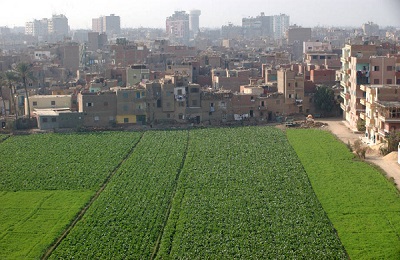
Berlin – Providing healthy diets for the world’s growing urban population requires forging stronger links between rural producers and urban markets and building food systems that are more socially inclusive, environmentally sound and less wasteful, FAO Deputy Director-General for Natural Resources, Maria Helena Semedo, said Friday.
She spoke at the opening of an FAO-organized meeting at the Global Forum for Food and Agriculture (GFFA) taking place during this year’s International Green Week in Berlin, from 15-24 January 2016.
Semedo warned of the difficulties that many cities face in ensuring regular and stable access to adequate food for all. “This will worsen as an increasing proportion of the hungry will be living in urban areas,” she said.
More than 50 percent of the world’s population currently lives in urban areas and this is expected to rise to 70 percent by 2050, particularly in developing countries.
Increasing effects of climate change, including storms, floods and other extreme weather events, pose an added threat to how people in cities, especially the poor, access food.
To address these needs, food systems – from production, distribution and consumption – must be made more sustainable, according to FAO. This includes guaranteeing access and active involvement of all stakeholders, farmers and smallholders, along the whole supply and value chain. Crucial to this is drastically reducing food losses and waste, which are especially high in urban areas. This includes measures such as redistributing edible unused food and using waste as compost or to generate energy.
Semedo underscored the role played by rural populations in contributing to the food security of those who live in cities.
“Feeding cities creates considerable opportunities for sustainable development – both in cities and in rural areas – especially when family farmers and small-holders are linked to these markets,” Semedo said.
Urban and peri-urban agriculture is also an important component of food systems with innovative techniques such as hydroponics – growing plants in water solutions containing minerals – and home and vertical gardens providing prospects to create jobs, offer nutritional diversity and contribute to healthy eating in towns and cities.
Integrating food into urban planning “essential”
Food security and nutrition “often remains overlooked” in urban planning and development but this must be changed if the international community is to achieve Sustainable Development Goal 11 of the 2030 Agenda for Sustainable Development which entails making cities inclusive, safe, resilient and sustainable, Semedo said.
To this end, “integrating food into urban planning is essential,” she stressed, noting that while city and metropolitan governments are increasingly taking part in local, national and global dialogues on food systems, “more needs to be done”.
This should be an inclusive process, bringing together government, the private sector and civil society, in ways that reflect the social, economic and ecological complexities of food systems, Semedo added.
Sh. Kh