
Social status has impact on overall health of mammals
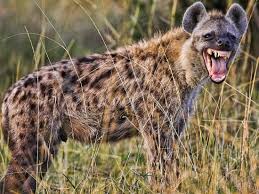
In a first-of-its-kind study involving a wild species, Michigan State University researchers have shown that social and ecological factors affect animal health. The results, published in the current issue of Biology Letters, focused on spotted hyenas in Kenya.
“High-ranking members in hyena clans reproduce more, they live longer and appear to be in better overall health,” said Nora Lewin,. “If you want to see the hierarchy of spotted hyenas, throw down some fresh meat near them. It’s quickly apparent who’s dominant and who’s not.”
But Lewin wondered if long-accepted biological markers would support what she was seeing in the field. Thanks to working with fellow lead author Kay Holekamp, MSU zoologist, and her long-running hyena experiment, Lewin had access to more than 25 years of data and was able to spend a summer afield in Kenya, observing hyenas’ social structure firsthand.
Lewin and her teammates focused on telomeres, caps at the end of each strand of DNA that protect chromosomes from deterioration. These biomarkers are regarded as important signs of aging and stress in many species, including humans. Shrinking telomeres are a signal that cells are sliding into defensive mode, stressful actions that could soon lead to cells’ — and to the organism’s — death.
High-ranking hyenas had longer telomeres than their subordinates. Group membership significantly predicted telomere length of those female hyenas that resided atop the social pyramid.
“This work shows, for the first time, the effects of social rank on telomere length in wild mammals,” Lewin said. “This enhances our understanding of how social and ecological variables may contribute to age-related declines of hyenas, and in organisms in general.”
Also, the team was able to rule out a few factors that could possibly be influencing telomere length. Abundance of food, a seemingly obvious factor for overall health, did not influence the size of the biological marker.
“The fact that there is variation in telomere length when prey abundance is constant means that there are other factors we need to find,” Lewin said. “We think it’s less about genetics and more influenced by the environment, but we just need to keep searching for the right environmental factors.
Source: Science Daily
N.H.Khider