
Wobbles in US-EU axis against Russia
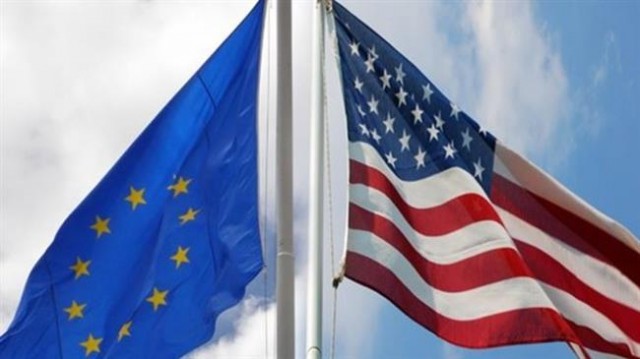
Finally, official Europe is coming to its senses about the dangerous course the US is driving, according to Finian Cunningham, Veterans news and Press TV.
French President Francois Hollande this week called for an end to Western sanctions on Russia. He is the latest senior European political figure to express misgivings about the hostile policy that Washington and Brussels have embarked on against Russia over the year-old Ukrainian crisis.
Hollande was speaking during a traditional New Year interview with French media covering a range of issues, both domestic and international. Referring to upcoming political negotiations in Kazakhstan aimed at finding an end to the Ukraine conflict, Hollande said that he was in favor of lifting sanctions imposed on Russia “if progress was made” at the talks.
Senior French, German and Russian officials are to meet in the Kazakh capital Astana on January 15, along with representatives from Ukraine.
The aim is to find a lasting solution to the violence that has been raging in eastern Ukraine since last April. That conflict has taken nearly 5,000 lives and threatens to escalate, despite a shaky ceasefire put in place last month.
As a preliminary to the Astana summit, officials from the above countries were meeting in Berlin this week to sketch out a possible agreement. Significantly, American officials are not involved, even though Washington is closely aligned with the regime in Kiev that seized power illegally last February, and which has launched a military offensive on the eastern Donbas Russian-speaking population, who refuse to recognize the legitimacy of the coup.
Washington and Brussels have sought to blame Russia for the crisis, claiming that Moscow is fueling separatist fighters in Donbas to undermine the Western-backed Kiev regime. Russia has repeatedly denied any such involvement. Moscow has pointed to the dearth of evidence for Western claims. It says the crisis stems from the illegal intervention in the internal affairs of Ukraine by the Western states, and that the ethnic Russian populations of Crimea and the eastern regions have simply responded, out of their own volition, with dissent towards the neo-Nazi anti-Russian regime that seized power in Kiev.
The Washington-Brussels axis has slapped economic and diplomatic sanctions on Russia, which have been met by counter-sanctions from Moscow. The deterioration in relations is not only having economic impacts on Russia, it is rebounding to cast a pall over Europe’s own faltering economy. Trade and commerce between Russia and the European Union are tenfold than between Russia and the US, so in the unfolding economic war the EU has much more to lose than Washington.
This partly explains why EU leaders are increasingly showing trepidation over the widening impasse.
“France seeks end to Russia sanctions over Ukraine,” reported the BBC this week on Hollande’s public call for restraint. The French leader is the latest high-profile EU figure expressing serious doubts about the Washington-Brussels aggressive policy towards Russia.
As the BBC report added: “Politicians in Italy, Hungary and Slovakia are among those who want the sanctions eased.”
To that list we could append Germany, Austria, Spain, Greece, Czech Republic and Bulgaria, among others.
Last weekend, Czech President Milos Zeman deplored the warmongering attitude of the Kiev regime, denouncing the CIA-installed Prime Minister Arseniy Yatsenyuk as “the prime minister of war.”
The day before Hollande made his comments, Germany’s Vice Chancellor Sigmar Gabriel warned against sanctions bringing Russia “to its knees” and risking “a conflagration.”
Germany’s second highest politician, and deputy to Chancellor Angela Merkel, is thus giving notice of significant opposition to the Washington-Brussels axis and its anti-Russian policy, which his boss, Merkel, has been up to now an ardent supporter of.
Gabriel told the Bild am Sonntag newspaper that the Washington-led policy is ruinous. “The goal was never to push Russia politically and economically into chaos,” said Gabriel, a member of the Social Democrat party, which historically prefers cordial relations with Russia.
In a hint at malign external forces thriving on conflict between Europe and Russia, Gabriel noted:
“Whoever wants that [Russia’s political and economic chaos] will provoke a much more dangerous situation for all of us in Europe.”
At the end of last month, German Foreign Minister Frank-Walter Steinmeier, a fellow Social Democrat member, also voiced disquiet over the Washington-Brussels axis that Merkel has dutifully followed.
“It cannot be in our interests that this runs out of control. We need to keep this in mind in our sanctions policy,” said Germany’s top diplomat, as reported in Deutsche Welle on December 19.
Hollande’s latest high-profile call for a reversal in policy towards Russia is not based on vague altruism. France, like Germany, is feeling the brunt of the sanctions war.
French unemployment hit a record high at the end of the year, reaching near 3.5 million or 10.5 per cent of the workforce. Bad news on the parlous state of the French economy keeps on piling up, and Hollande’s personal rating among increasingly angry French voters keeps on plumbing new depths.
European citizens know that the crisis over Ukraine and between Europe and Russia is wholly unnecessary. They know that the tensions have been whipped up by Washington for its own selfish strategic interests of driving a wedge into the continent. Up to now, EU leaders have stupidly gone along with this reckless policy even though it is rebounding in further economic hardship for EU citizens and risking an all-out war.
The latest wobble in the Washington-Brussels axis against Russia, as expressed this week by Francois Hollande, has to be seen as good news. In that, at last, finally, official Europe is coming to its senses about the dangerous course the US is driving.
A political theme that has gained momentum over the past year is the “democratic deficit” across the EU that is alienating millions of its citizens. What more disturbing democratic deficit can you get than Brussels slavishly following Washington’s warmongering policy against Russia – in total detriment to the interests of EU citizens over crucial matters of their livelihoods and ultimately over the risk of an all-out war in Europe.
M. Wassouf