
After Political, Security, and Economic Crises between Syria and Lebanon, Salam’s Visit Rebuilds Relations
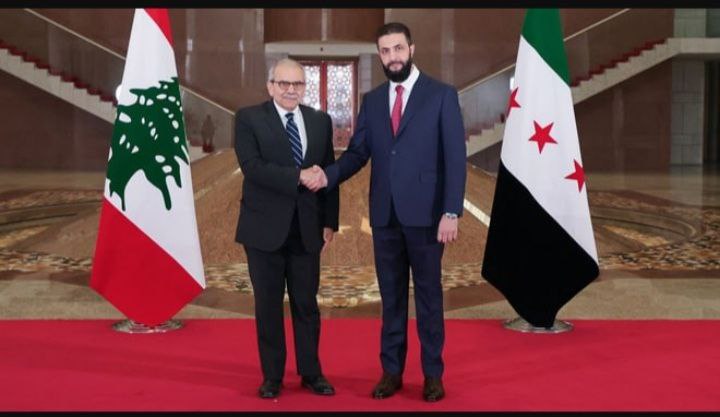
After a severe rift during the era of the former regime, which resulted in political, security, and economic crises between the two countries, Lebanese Prime Minister Nawaf Salam’s first visit to Syria represents an important step toward restoring relations between the two countries to normal way.
During his visit to Sharaa, Nawaf Salam hoped to return with good news about the Lebanese citizens who were kidnapped during the ousted regime and are currently missing in Syrian prisons. He also discussed the security situation along the border, preventing smuggling, and closing illegal crossings.
At a time when both countries are facing repeated Israeli attacks, it is essential to unify their efforts to confront Israeli aggression and threats.
In addition to strengthening security cooperation between the two countries due to the serious violations committed by Hezbollah militias, including their use of illegal crossings to continue their arms and drug smuggling operations. This is particularly true given that Hezbollah militias had increased their arms and drug smuggling operations after blocking the road between Tehran and Beirut following the victory of the revolution and the fall of the deposed regime.
By the hosting of the kingdoom of Saudi Arabia, a security meeting between the Syrian and Lebanese delegations in Jeddah late last month, an agreement was announced between the two sides regarding the border, and to coordinate and enhance cooperation on security and military issues between Lebanon and Syria.
The meeting was attended by Saudi Defense Minister Prince Khalid bin Salman, Syrian Defense Minister Major General Engineer Marhaf Abu Qasra, Lebanese Defense Minister Major General Michel Menassa, and the accompanying security delegations.
The signing of the agreement between the two sides underscores the strategic importance of demarcating the border between the two countries, forming legal and specialized committees in a number of fields, and activating coordination mechanisms between them to confront security and military challenges.
Hanan Shamout