
Will Syria Be Affected by Trump’s Decision of imposing Tariffs
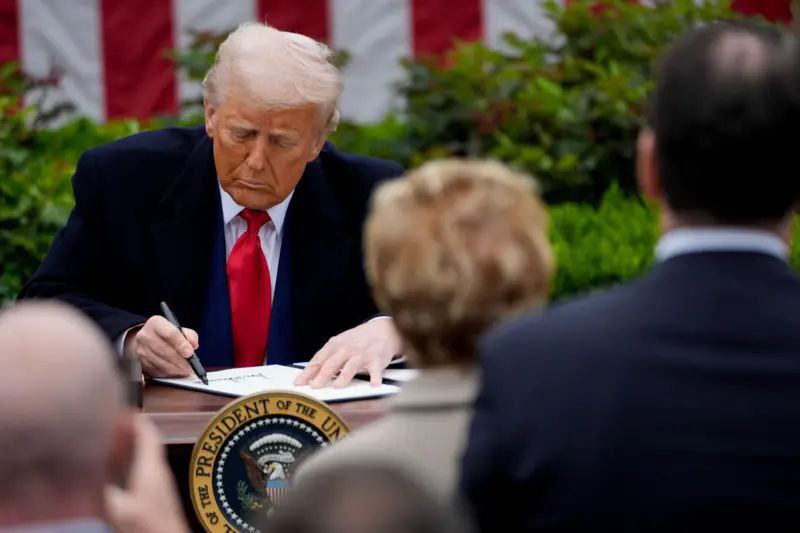
The main objective behind U.S. President Donald Trump’s decisions to impose tariffs on countries around the world, including Arab countries such as Syria, is to create a trade war that exerts pressure on specific nations to achieve political agendas or ambitions that began with the new U.S. administration.
This comes amid U.S. predictions and probabilities of a potential recession, as the likelihood has risen to 50% following the announcement of tariff impositions. These decisions came two months after earlier measures, as President Trump started to implement his economic vision by imposing tariffs on some countries, starting with Canada, Mexico, and China, before expanding to affect the European Union and more than 200 other countries, islands, and regions.
The long list of countries subjected to Trump’s tariffs also includes Arab nations, most of which were hit with a 10% tariff, including Egypt, Sudan, Lebanon, Yemen, Saudi Arabia, the UAE, Kuwait, Qatar, Bahrain, Morocco, Mauritania, Oman, and Comoros. Syria was hit with a 41% tariff, Iraq 39%, Jordan 20%, Tunisia 28%, Algeria 30%, and Libya 31%.
The impact of Trump’s decisions on Arab countries will be varied and indirect, within the global ripple effect of U.S. actions. Since Arab countries are not heavily reliant on exports to the U.S., except for oil, and their exports to the U.S. are relatively small compared to American imports, the direct effect will be limited. However, the “indirect” impact will likely come in the form of severe inflation in the countries affected by these decisions due to the trade war, leading to increased prices of many products imported by Arab countries.
The UAE, Saudi Arabia, and Kuwait will be the most affected by these U.S. decisions due to the scale of their trade dealings with the U.S. However, the volume of U.S. exports to Arab countries is “very small” to the extent that it won’t cause severe inflation in these countries, in contrast to others like China and the European Union, which have significant trade relationships with the U.S. in sectors like technology and automobiles.
In general, Trump’s recent decisions represent a highly dangerous political game, as they aim to assert U.S. control in a way that showcases the power of the U.S. before global powers and pressures countries to align economically and politically with U.S. plans.
Source : Al Thawra Newspaper