
Syrian Jews hope for reconstruction and a permanent return after decades in exile
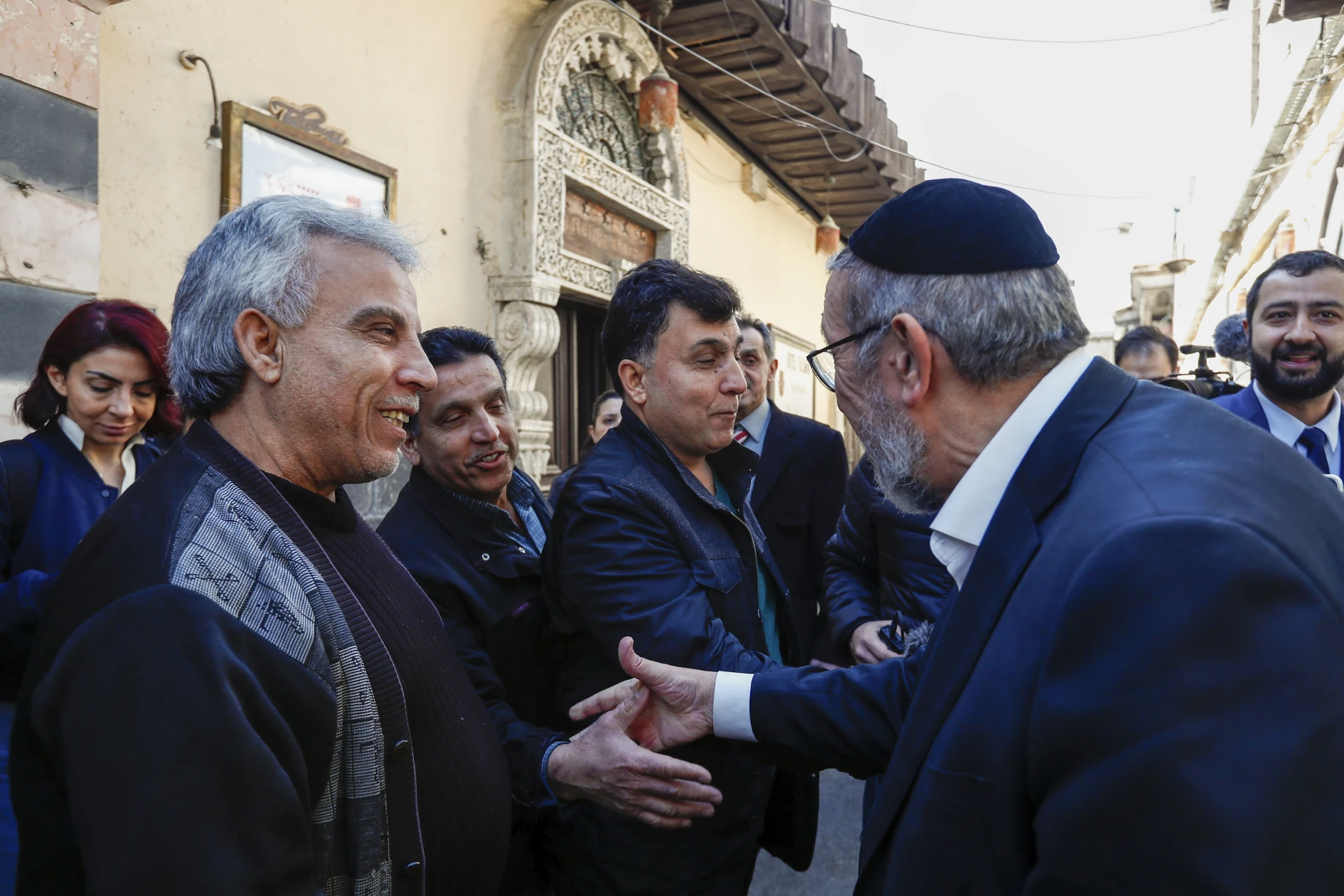
As Rabbi Yusuf Hamra and his son Henry were visiting Damascus this week for the first time since emigrating from Syria to the United States more than three decades ago, they were met by former neighbors offering embraces and gossip .
The Syrian-American Jewish family returned as part of a delegation organized by the Syrian Emergency Task Force, a U.S.-based nonprofit organization, in the wake of Assad’s regime
Although they had not met in more than 30 years, the family’s neighbors spotted Yusuf on the street and remembered him from when he was a teacher in the local school. An excited exchange of reminiscences ensued to catch up on the decades, with gossip about who had married who, who was still living and who had emigrated.
“I left from Syria, but Syria never left us,” said Henry, who was 15 when his family left for New York.
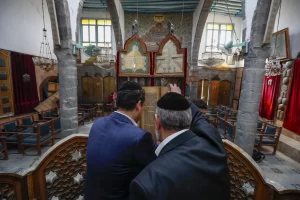 During the visit, the Hamras prayed in the long-neglected al-Franj synagogue where Yusuf used to serve as a rabbi, in what is still known as the Jewish quarter, in the old city of Damascus, although only a small handful of Jews remain.
They also visited the historic synagogue in the suburb of Jobar, which was heavily damaged and looted during Syria’s nearly 14-year war.
“May God help us, this won’t be rebuilt for decades,” Yusuf said as he surveyed the destruction.
The community in Syria numbered about 100,000 at the start of the 20th century.
Henry Hamra recalled that his family had lived in constant fear of the draconian Syrian intelligence services – a common experience for Syrians of all religions during the Assad dynasty’s rule, but even more so because they were Jewish and subject to extra scrutiny.
At the same time, he remembered the family’s close bond with their Muslim and Christian neighbors.
Mouaz Moustafa, executive director of the Syrian Emergency Task Force, said he hoped that the Jewish delegation would encourage more Syrian Jews to return – and would help make the case for Washington to lift sanctions that had been imposed during Assad’s era.
Yusuf Hamra sent a letter to President Ahmad al-Sharaa in which he said that the Syrian Jewish community abroad “continues to cherish its deep-rooted connection to Syria, its motherland.”
“Throughout history, this community has been an integral part of the Syrian national fabric,” Hamra wrote. “We look forward to rebuilding bridges of communication and to actively participating in the reconstruction of our homeland, standing side-by-side with our fellow Syrians.”
Source: AP
Edited by: Basma Qaddour