
Syria officially at Munich Security Conference
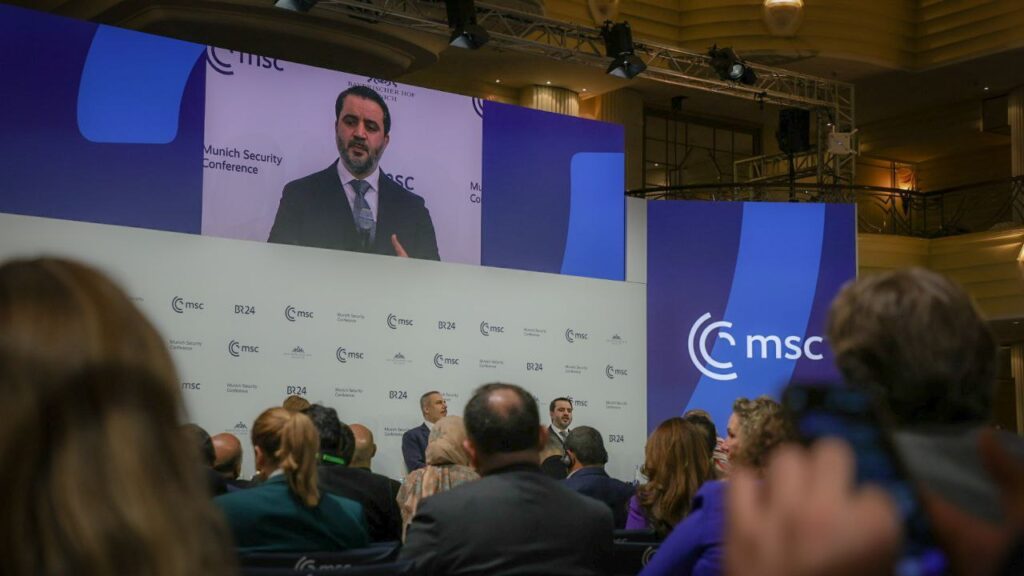
The 61st Munich Security Conference was held between February 14 and 16, bringing together international decision-makers and experts from all over the world to discuss international security issues and draw up the world’s security policies.
What distinguished this event this year was Syria’s official participation for the first time since the establishment of this conference in 1963. Syria’s presence in the conference reflected its desire to gain the international trust and to explain its new political and economic approaches and stress commitment to regional stability. Also, Syria’s presence in this conference, in itself, indicated the international openness and desire to know about the new administration in Syria and how Syria’s future will look like in terms of politics, economy and society.
Syria was represented in the Conference by Minister of Foreign Affairs and Expatriates Asaad Al-Shibani, who held several meetings to explain the situation in Syria following the fall of Assad regime and to send different messages indicating that Syria is now different and that it is possible to improve Syria’s image in the international community. Al-Shibani was keen on assuring the conferees that what happened in Syria had taken place peacefully and that Syria will have an inclusive government, but this needs time and international support.
Prior to Munich conference, Syria participated in the international conference on Syria in Paris, which was held with broad international participation, and whose final statement included recognition of the Syrian transitional government, support for the transitional phase in Syria and support for holding a national dialogue conference.
In the early years of the Syrian Revolution, which started in 2011, the Syrian file was present in Munich conference through the participation of oppsition figures and the discussion of political developments in Syria. However, in recent years, the world became less engaged with Syria as it focused on other files, while the Syrians were keen on continuing their confrontation of the former regime’s practices.
Today, after the fall of Assad regime, the world will not be able to ignore Syria in the world decision conferences as the Syrians have imposed a new situation that forced the world to deal with their cause.
Hamda Mustafa