
The Destruction of Memory: One of Syria’s Greatest Catastrophes
Over the past years, Syria has suffered one of its greatest disasters—the destruction of its historical memory. This is the country that gave humanity the first alphabet, the first grain of wheat, the first poem, and the first sword. Yet, its archaeological treasures are being systematically looted and destroyed across various regions, prompting the United Nations to issue a call to protect Syria’s heritage as a treasure for all of humanity.
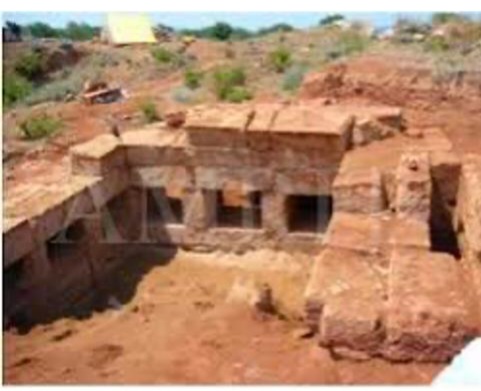
What brings this issue to the forefront today are the recently circulated images showing acts of vandalism against several archaeological sites. The latest example is what is known as the “Azar Tombs” near Tartus, which contain ancient Phoenician and Roman graves. These tombs are being excavated with heavy machinery by treasure hunters hoping to uncover jewels, artifacts, and other valuable items, which they then sell on the black market for exorbitant sums.
But the problem doesn’t stop there. Social media today is flooded with advertisements marketing and selling metal detectors and treasure-hunting devices. Many people are reportedly selling their homes just to buy one of these devices, hoping for a lucky strike that will make them rich overnight. Recently, security forces in the central region released a video documenting the arrest of a group of illegal excavators in rural areas, along with the confiscation of their excavation tools.
Syria’s museums have fortunately been spared from the kind of looting and destruction that Iraq experienced in the past. From the very first hours of Damascus’s liberation, the National Museum—home to some of Syria’s most important historical treasures—was placed under strict guard. However, other archaeological sites have not been as fortunate, suffering from widespread illegal excavations and looting in many regions suspected of containing historical artifacts.
Returning to the Azar Tombs, which experts believe belonged to the ancient inhabitants of Arwad Island—who buried their dead on the mainland shore opposite the island—these graves are now being extensively plundered in search of hidden treasures. What these thieves fail to realize is the true historical value of what they find—discoveries that could potentially reshape our understanding of history. Didn’t something similar happen when a farmer’s plow struck a large rock, which he thought was just another boulder? That rock turned out to be the ruins of Ugarit, the ancient city where the world’s oldest alphabet was discovered, revolutionizing historians’ understanding of writing and literacy.
Syria holds a prestigious position among the world’s nations in terms of cultural heritage, with numerous archaeological sites and ancient kingdoms scattered throughout the country. Some of the most significant include Old Aleppo, Old Damascus, Bosra, Salah al-Din’s Castle, and Palmyra, alongside a long list of the so-called “Forgotten Cities.” The renowned archaeologist Georges Tchalenko estimated that there are around 778 such sites, some in ruins, others overlaid with modern settlements, and many left unprotected and unpreserved.
Can we truly build the future without understanding the lives and achievements of our ancestors—achievements that the world has recognized and celebrated for their immense contributions to humanity? Can Syria, the mother tree, stretch its branches toward the sky if it does not draw nourishment from its roots?
Surely, the looters of history have no idea of the magnitude of their crime.