
Activities of Arab Sustainable Development Week kicks off in Cairo with Syria’s participation
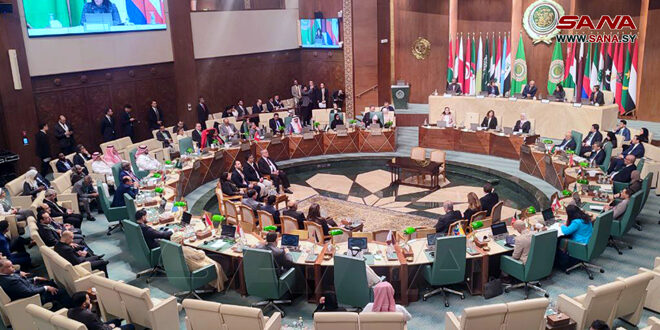
With Syria’s participation, the activities of the fifth edition of the Arab Sustainable Development Week kicked off today at the headquarters of the Arab League in the Egyptian capital, Cairo, under the title “Sustainable Solutions for a Better Future… Resilience and Adaptability in a Developing Arab World.”
In his speech at the opening of the Arab Development Week, Ahmed Aboul Gheit, Secretary-General of the Arab League, pointed out that the wars waged by the Israeli entity in the region, especially in Gaza and Lebanon, weaken the peoples’ chances of achieving sustainable development, declining growth rates, depleting energies and resources, and losing opportunities. He referred to the difficult circumstances the region is going through, coinciding with unfavorable global inflation and debts that are crushing economies, some of which are advanced and others belong to the countries of the South, and climate change and the associated escalation of migration phenomena and conflicts over natural resources.
Aboul Gheit underlined the significance of the title of the current session of the Arab Week, which is Sustainable Solutions for a Better Future… Resilience and Adaptability in a Developing Arab World, noting that the greater part of the time period specified for achieving the goals of the 2030 Plan for Sustainable Development has passed, and we have not yet reached a satisfactory level that matches our ambitions in the Arab region, which necessitates the need to accelerate the pace of work and enhance the ability to adapt.
In a special statement to SANA correspondent in Cairo on the sidelines of the Arab Week, Rifaat Hijazi, Assistant Chairman of the Planning and International Cooperation Authority, stressed the importance of exchanging expertise between Arab countries regarding stimulating progress towards sustainable development by 2030.
Hijazi said: “We are participating in the activities of the Arab Week to represent Syria in the first session in which it participates, and the week includes the Investment Forum for Sustainable Development, which discusses governments adopting incentive policies to activate the participation of the private sector in financing development according to national priorities, as well as specialized sessions towards progress in sustainable development, and improving and reviewing policies in order to enhance the role of youth in the field of sustainable development.”
Hijazi added: Syria prepared the second voluntary national review report for sustainable development, which was presented in July 2024, and included two types of messages that we carry to the Arab Sustainable Development Week. The first type of messages was directed to the international community on how to overcome sanctions and unilateral coercive measures, and how to support Syria financially and technically. The second type is messages from within Syria about partnering with the government, the private sector, the People’s Assembly, civil society and organizations to stimulate their roles in investing in some priority sectors.
Dr. Shadi Ali, Deputy Head of the Planning and International Cooperation Commission, said: We have worked to include the UN Sustainable Development Goals in our 2030 National Plan, and we are working on the voluntary follow-up reports that Syria is conducting at the national and local levels. He added: It is necessary to program development efforts and distribute roles in cooperation with Arab brothers and at the national level in the public and private sectors to stimulate economic growth and achieve more development and justice in its distribution.
The four-day week’s activities will discuss the importance of finding practical solutions that would accelerate the pace of implementation by strengthening effective partnerships that push towards achieving sustainable development in the Arab region.
Inas Abdulkareem