
Handmade chandeliers… an ongoing profession by Syrian skilled craftsmen
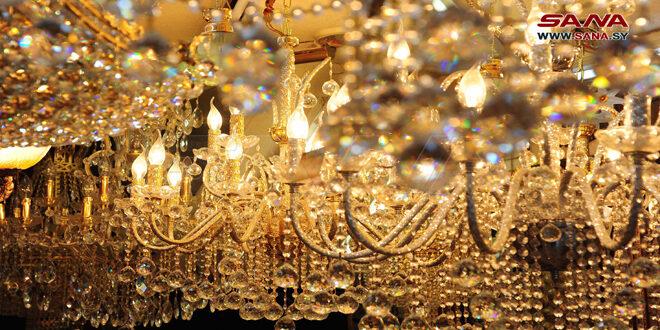
The handmade chandeliers industry in Syria has maintained its existence despite the repercussions of the terrorist war, the imposed economic blockade, and the living conditions.
It has withstood imported alternatives thanks to the craftsmen’s adherence to the heritage of their ancestors through preserving this profession, whose products have always surpassed their counterparts in the world thanks to the ingenuity of manufacturing and the richness of the components.
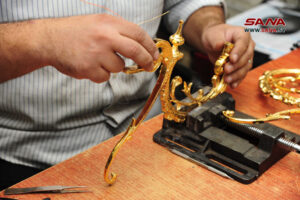 Among the craftsmen who have been working in the craft of making handmade chandeliers for decades is the craftsman Faisal Ghazi, who told SANA that he and his four brothers inherited this profession from their father, who was the first to establish a factory to manufacture these chandeliers in Syria 60 years ago in an artistic manual way, without using a machine.
He stressed that he and his family are accustomed to passing on the profession to anyone who loves the profession and wants to learn its principles.
Ghazi points out that he holds training courses in this regard at the Dummar Cultural Incubator in Damascus or in his factory for a number of interested young people, indicating that some of whom have mastered it and now have their own workshops or factories for producing chandeliers.
He noted that the secret of distinction in this craft lies in the craftsman’s ability to master, innovate and develop.
Regarding the chandeliers he manufactures, the Syrian craftsman said that he makes chandeliers covered with copper or plated with gold or bronze, relying on iron to form the basic structure and covering it with copper or glass from the edges, then assembling it and decorating it with crystal or glass pendants, to be used to decorate homes, places of worship, and event halls.
Ghazi expresses the importance of participating in internal and external marketing exhibitions and inviting participants from outside Syria to attend and learn about everything new.
Despite owning a factory and two shops in Damascus to display his products, he finds these exhibitions to be a marketing opportunity, especially when the craftsman meets directly with the owners of the establishments to whom he exports.
Ghazi believes that preserving and developing the handmade chandeliers industry is within reach, especially since our country continues to innovate with the presence of government facilities and customs exemptions when importing raw materials that help craftsmen to continue working and producing.
Rawaa Ghanam