
The Agricultural Bank lends farmers SYR 300 billion to finance their projects
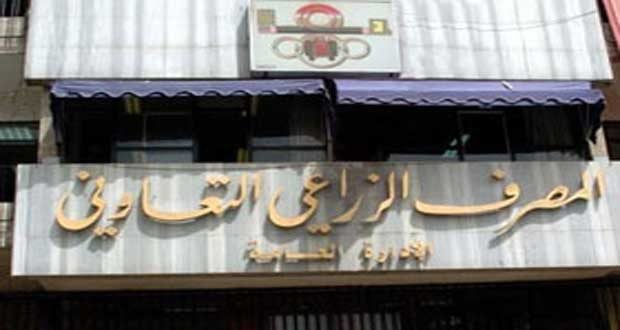
The Director of the Cooperative Agricultural Bank Ahmed Al-Zuhri has revealed in a statement to the state-run “Tishreen” newspaper that the value of the loans granted by the bank to date hit about 296 billion Syrian pounds, out of the current year’s plan which hits SYR 700 billion, with an implementation rate of 42.23%.
He pointed out that the bank finances farmers, who apply for short, medium or long-term loans with the aim of operating their agricultural or agro-industrial projects, according to the technical licenses related to the project, and according to economic feasibility studies with the request for possession documents for the places to establish these projects.
Al-Zuhri added that the most important projects are the ones that are related to buying tractors and cows, equipping cattle farms and poultry farms, buying renewable energy, drilling wells, constructing greenhouses, financing tanks, purchasing fixed refrigerator equipment and supplies, etc.
He indicated that the amount of deposits since the beginning of this year until June 30 reached SYR 690.515 billion, clarifying that the bank’s credit plan was increased by 250% in the year 2024 due to the large demand for loans, especially in light of the high production costs.
Regarding the bank’s role in securing production requirements, Al-Zuhri said that the bank is meeting agricultural production requirements in partnership with the concerned authorities, especially the Ministry of Agriculture and the General Corporation for Foreign Trade, which concludes contracts, where the bank buys fertilizers and sells them to farmers in accordance with agricultural licenses issued by the departments and directorates of the Ministry of Agriculture.
“Previously, the bank used to secure most of the country’s fertilizer needs from the General Fertilizer Company for all crops and within the required times, and a strategic stock remains in its warehouses, but currently it resorts to securing fertilizers locally from the Russian company investing in the fertilizer factory or from Local companies under internal contracts and imports from friendly countries,” he added.
Al-Zuhri concluded by saying: “The bank suffers from the lack of cash money due to the large obligations it has incurred as a result of paying the values of fertilizers borrowed from the General Fertilizers Company on the one hand, and paying the values of imported Urea fertilizer according to the contract concluded with the Serbian side to supply an amount of 50 thousand tons of urea fertilizer in exchange with Syrian phosphate. So, the bank was forced, after the approval of the Economic Committee, to get from the Central Bank of Syria the amount of SYR 300 billion as a loan to pay for the fertilizer.”
Basma Qaddour