
Crafting Sweet Heritage: The Story of Syrian Maamoul Molds
 The art of crafting wooden molds for Syrian sweets, particularly maamoul, is a testament to the rich cultural heritage and artisanal skills passed down through generations. Syrian maamoul mold making is a cherished tradition that reflects the country’s history, artistry, and culinary excellence. It is a practice that has stood the test of time, adapting to modern influences while maintaining its cultural significance.
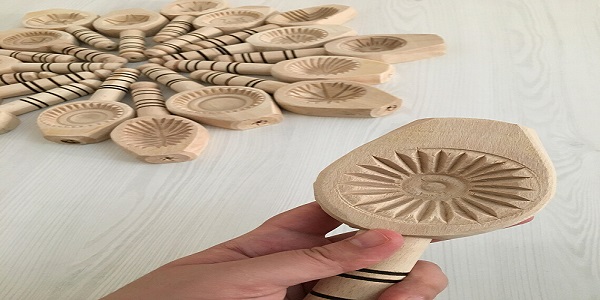
 These wooden molds, intricately carved and passed down through generations, are not only functional but also carry deep artistic significance. The designs on the molds serve as a visual language, allowing individuals to identify the type of filling—be it date paste or nuts—without the need for verbal confirmation.
The selection of wood is crucial, as it must be hard enough to withstand the shaping process and soft enough to be intricately carved. Traditionally, Syrian artisans have used various types of wood,often from trees like cedar or walnut, known for their durability and fine grain. These woods are then treated and seasoned to ensure they are free from moisture and ready for carving. The artisans’ expertise lies in their ability to transform these woods into the desired shapes, ensuring they are smooth and free from imperfections.
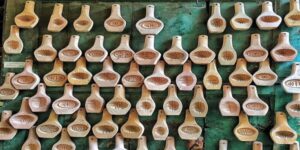 Once the basic form is achieved, the wood is further refined using a lathe or hand-carving tools to create the intricate patterns and details that characterize Syrian maamoul molds. The final product is not only a tool for shaping sweets but also a piece of art that reflects the artisan’s skill and the cultural significance of the sweets it helps create.
Syrian sweets production involves a variety of molds, each designed to produce different types of sweets. The diversity of molds allows for a wide range of designs and fillings, from traditional date paste to modern variations with nuts or other ingredients.
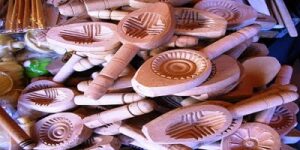
Maamoul molds come in a variety of designs, each typically associated with a specific type of filling. The mold design is intricately linked to the type of filling it will hold. For instance, the long-handled tools known as “taabehs” “nakchee” are intricately carved, with different designs corresponding to their fillings.
The uniformity of the engravings across different molds allows for an immediate recognition of the filling type. For instance, a mold with a specific pattern may indicate a walnut filling, while another with a different design might suggest a date paste filling. This visual language of patterns enables individuals to identify the contents of each maamoul without the need for verbal confirmation.
The molds are a crucial part of the maamoul-making process, ensuring that each cookie is uniform in shape and size, and that the filling is perfectly encased within the dough.Here are some examples:
– Disc-shape: Typically used for date paste fillings, which are soft and pliable, the molds are typically shallower and have finer engravings. This allows the dough to be easily pressed into the mold and shaped without resistance, creating a smooth surface that complements the soft texture of the date filling.
– Oval-shape: Often used for walnut fillings.molds for nut fillings require a different approach. Nuts are harder and can cause the dough to crack if not handled properly. Therefore, these molds are often deeper and have a more dome-shaped design. The larger size provides ample space for the dough to envelop the nut filling completely, ensuring that it is fully encased without any sharp edges from the nuts piercing through
– Dome-shape: Commonly used for pistachio fillings, which is the smallest as pistachio is the most expensive filling so the molds are smaller to make a larger number of maamoul pieces with less filling.
The choice of mold not only affects the final appearance of the maamoul but also its structural integrity. A well-designed mold ensures that each piece of maamoul is uniform in shape and size, making them not only aesthetically pleasing but also easier to handle and enjoy. The artistry involved in creating these molds is a testament to the skill and tradition of Syrian artisans.
In essence, the engraved designs on Syrian maamoul molds serve as a bridge between functionality and artistry, allowing for a seamless experience where one can appreciate both the taste and the visual beauty of these traditional sweets.
These intricate patterns are a hallmark of Syrian craftsmanship and are deeply rooted in tradition. The designs are often passed down through generations, with each family having their own unique molds that reflect their heritage and identity.
Over time, the tradition has evolved, with some artisans transitioning to more durable materials like metal or plastic. However, many still prefer wooden molds for their authenticity and connection to Syrian heritage. Despite changes, the essence of the tradition remains, symbolizing Syrian craftsmanship and playing an integral role in the maamoul-making process.
Efforts to document and promote this tradition globally have been made through culinary websites, cookbooks, cultural heritage organizations, workshops, exhibitions, and online platforms. These initiatives help preserve the tradition and ensure that it continues to be recognized and celebrated around the world.
The wooden mold artisans play a vital role in maintaining this aspect of Syrian culture. Their dedication ensures that the art of maamoul making remains a cherished tradition, passed down through generations and enjoyed by all who partake in its sweet delights. Despite the availability of modern materials like plastic or metal, many Damascus residents prefer wooden molds for their maamoul due to their connection to heritage and the memories associated with these traditional molds.
In conclusion, the wooden mold artisans of Damascus are not just creators of tools; they are custodians of a craft that is both ancient and essential to the production of maamoul. Their work reflects the rich history and artistic expression of Syria, with each mold being a unique piece of art that contributes to the identity of Syrian sweets production.
Lama Alhassanieh