
Gaza Part I

Israel began its  siege on the Gaza Strip following the victory of the Hamas movement in the legislative elections in January 2006,  tightening  it after the movement took military control of the Strip in June 2007.They then declared the Gaza Strip a “hostile entity” and imposed additional sanctions that severely affected the Gaza Strip – this included imposing severe restrictions on the entry of fuel and goods and the movement of individuals to and from the Strip. Over the years, the Israeli authorities have worked to establish a policy of isolating the Gaza Strip, by separating it from the Palestinian territories in the West Bank and East Jerusalem, in addition to controlling the quantity and quality of goods and materials entering the Gaza Strip and banning hundreds of items.This caused a comprehensive economic recession in the sector, and a sharp rise in poverty and unemployment rates. Moreover, the Israeli blockade particularly affected the health sector in Gaza, as many basic medical items and supplies were not available, and many patients were forced to wait months for surgical operations. During the years of the siege, Israel launched four devastating military attacks on the Gaza Strip, resulting in the killing of thousands of civilians, the destruction of tens of thousands of homes and civilian facilities, and causing widespread destruction of infrastructure facilities.

Under international law, the Gaza Strip remains under Israeli occupation despite the unilateral withdrawal from the Strip in 2005, with Israel retaining full control over the Strip’s land, sea and air accesses. Likewise, it controls Gaza’s population registry, communications networks, and many other aspects of daily life and infrastructure. Instead of fulfilling its duty to protect the civilian population, Israel imposed an unprecedented form of collective punishment on the population of the Gaza Strip, in flagrant violation of international humanitarian law simply because the people of Gaza opted to vote for who they considered was best for them and not best for Israel!!

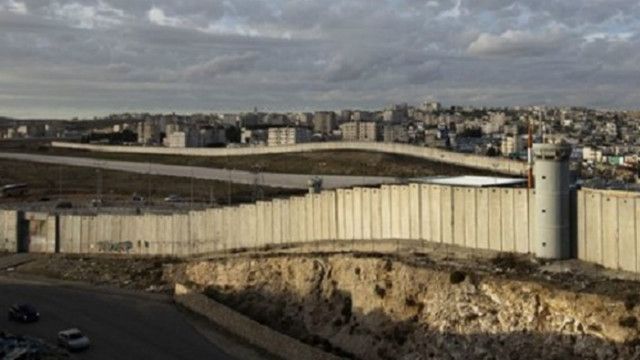
Let us not forget The Wall.In December 2021, Israel announced the completion of construction of the massive barrier(wall) that runs the length of the Gaza Strip above and below ground. The project, which cost 3.5 billion shekels ($1.1 billion), took more than three and a half years of work, according to the Israeli Ministry of Defense.The wall is 65 kilometers long.

It extends to the sea in order to ensure that the armed factions in the Gaza Strip do not dig underwater tunnels.The Ministry of Defense said at the time that the “smart fence” includes hundreds of cameras, radars and sensors.

This barrier consists of several components: an underground reinforced concrete wall studded with tunnel detection sensors, a six-meter-high steel fence, a network of radars and other surveillance sensors, and remote-controlled weapons.

The Washington Post said at that time  that on the Israeli side, watchtowers and sand dunes were erected to monitor threats and slow down intruders.

But on Saturday,October 7th  Hamas militants crossed the wall after opening loopholes and crossing on foot, motorcycles, and an SUV.

According to the Israeli army, the fence was breached at 29 points.

Reem Haddad
Editor-in-Chief
You might also like
.. _copyright: Copyright ========= .. code-block:: none Copyright (C) 1998-2000 Tobias Ratschiller Copyright (C) 2001-2018 Marc Delisle Olivier Müller Robin Johnson Alexander M. Turek Michal Čihař Garvin Hicking Michael Keck Sebastian Mendel [check credits for more details] This program is free software; you can redistribute it and/or modify it under the terms of the GNU General Public License version 2, as published by the Free Software Foundation. This program is distributed in the hope that it will be useful, but WITHOUT ANY WARRANTY; without even the implied warranty of MERCHANTABILITY or FITNESS FOR A PARTICULAR PURPOSE. See the GNU General Public License for more details. You should have received a copy of the GNU General Public License along with this program. If not, see . Third party licenses ++++++++++++++++++++ phpMyAdmin includes several third-party libraries which come under their respective licenses. jQuery's license, which is where we got the files under js/vendor/jquery/ is (MIT|GPL), a copy of each license is available in this repository (GPL is available as LICENSE, MIT as js/vendor/jquery/MIT-LICENSE.txt). The download kit additionally includes several composer libraries. See their licensing information in the vendor/ directory.