
Council of Arab Information Ministers adopts the joint Arab strategy for combating extremism and terrorism in media
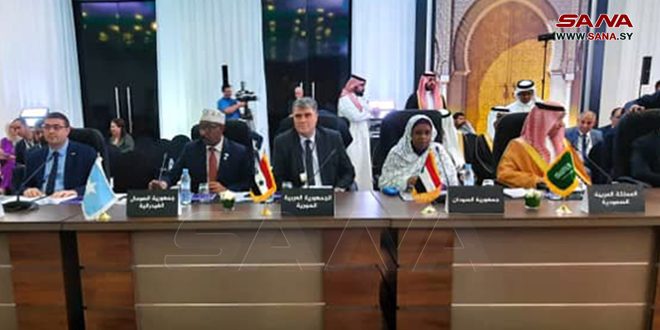
The Council of Arab Information Ministers, in its 53rd regular session, approved several decisions on the Palestinian cause and highlighted the developments of the Israeli occupation acts of aggressions in occupied Al-Quds (Jerusalem), in addition to the situation of Arab media and future plans.
The council, held in Rabat , the capital of Morocco, adopted the joint Arab strategy to combat extremism and terrorism in the media, in addition to the Arab media map for sustainable development 2030 and the executive measures for the unified strategy in order to deal with international media companies.
In his speech before the Council, Syria’s Deputy Information Minister Ahmed Dawa affirmed that Syria looks positively at the future, underlining Arab cooperation and solidarity to confront the current challenges and cope with global developments.
Dawa called for stopping the exploitation of the Syrian refugees’ suffering, noting that a number of decrees and decisions were issued to facilitate the refugees’ voluntary return to Syria in order to participate in reconstructing what terrorism has destroyed.
He affirmed that the US occupation has plundered the Syrian resources, including the oil and wheat, and has supported the terrorist organization ISIS which always targets civilian buses and Syrian Arab Army points in the Syrian desert area.
He called for condemning the western coercive economic measures imposed on Syria, targeting the Syrian people and preventing them from securing their basic needs.
Dawa pointed out that the United States doesn’t want to put an end to the issue of Al-Rukban camp, despite the Syrian government’s repeated attempts to cooperat with the United Nations to return the civilians in this camp to their original residence area after the Syrian Army liberated it from terrorism.
Hamda Mustafa