
Syria, WFP discuss ehancing cooperation to ensure that aid reaches those who deserve it
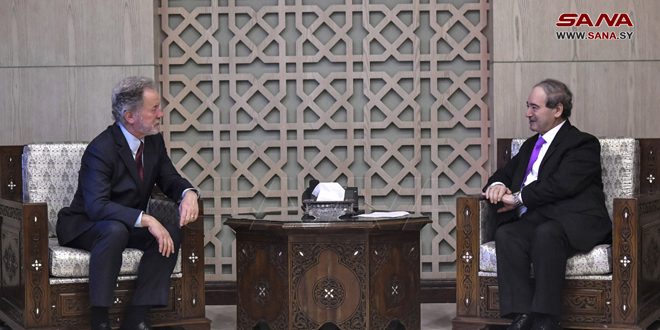
Dr. Faisal Al-Mikdad, Minister of Foreign Affairs and Expatriates and David Beasley, the Executive Director of the World Food Program (WFP), on Thursday discussed cooperation between the program and the various Syrian national authorities, and ways to strengthen relations in a way that facilitates the work of the program in the country, and ensures that more aid reaches those who deserve it in Syria away from any politicization in order to achieve recovery for the Syrians and reduce their dependence on emergency relief aid.
Minister Al-Miqdad reviewed the negative effects and repercussions of the terrorist war imposed on Syria, which affected the various developmental achievements of the Syrians, especially with regard to ensuring their food security.
The Minister also reviewed the humanitarian disasters caused by the unilateral coercive economic measures imposed on Syria, as well as the obstruction of these measures to the efforts made by the Syrian government in various fields to improve the conditions of Syrians and secure their basic needs.
Minister Al-Miqdad talked about the theft practiced by the American occupation forces and their agents of Syrian oil and wheat, and the dangerous impact of the continuation of these practices on all Syrians.
In turn, Beasley expressed his thanks and appreciation to the Syrian government for the facilities Syria provides for the program’s work in the country, praising the high level of cooperation currently existing between the program and many partners in Syria. He also presented a number of issues and ideas that the program is working to focus on in its projects, in order for these projects to have a more effective role in helping Syrians overcome the economic difficulties they are going through.
Minister Al-Miqdad reviewed the negative effects and repercussions of the terrorist war imposed on Syria, which affected the various developmental achievements of the Syrians, especially with regard to ensuring their food security.
The Minister also reviewed the humanitarian disasters caused by the unilateral coercive economic measures imposed on Syria, as well as the obstruction of these measures to the efforts made by the Syrian government in various fields to improve the conditions of Syrians and secure their basic needs.
Minister Al-Miqdad talked about the theft practiced by the American occupation forces and their agents of Syrian oil and wheat, and the dangerous impact of the continuation of these practices on all Syrians.
In turn, Beasley expressed his thanks and appreciation to the Syrian government for the facilities Syria provides for the program’s work in the country, praising the high level of cooperation currently existing between the program and many partners in Syria. He also presented a number of issues and ideas that the program is working to focus on in its projects, in order for these projects to have a more effective role in helping Syrians overcome the economic difficulties they are going through.
NR